
The creative arts have been given to humanity to help us heal and express our emotions and for those more spiritually inclined can also help us connect to powers and energies greater than ourselves. To create is a natural urge that every teenager in the midst of teen angst knows. The relief of that maudlin poem or that furious painting or those piercings that express our anger and despair to the world or just for ourselves.
A whole lot of that healing comes from telling our stories without interruption, without judgement. Writing out our feelings helps us understand them better. Sharing these feelings with others is empowering. Our voices are heard. Our side of the story, our experiences of the world are valuable and valid.
Often, I write to bear witness to the lives of lost loved ones, but there is another power of the written word – justice within a system not yet truly able to serve the needs of women, children or the Queer community.
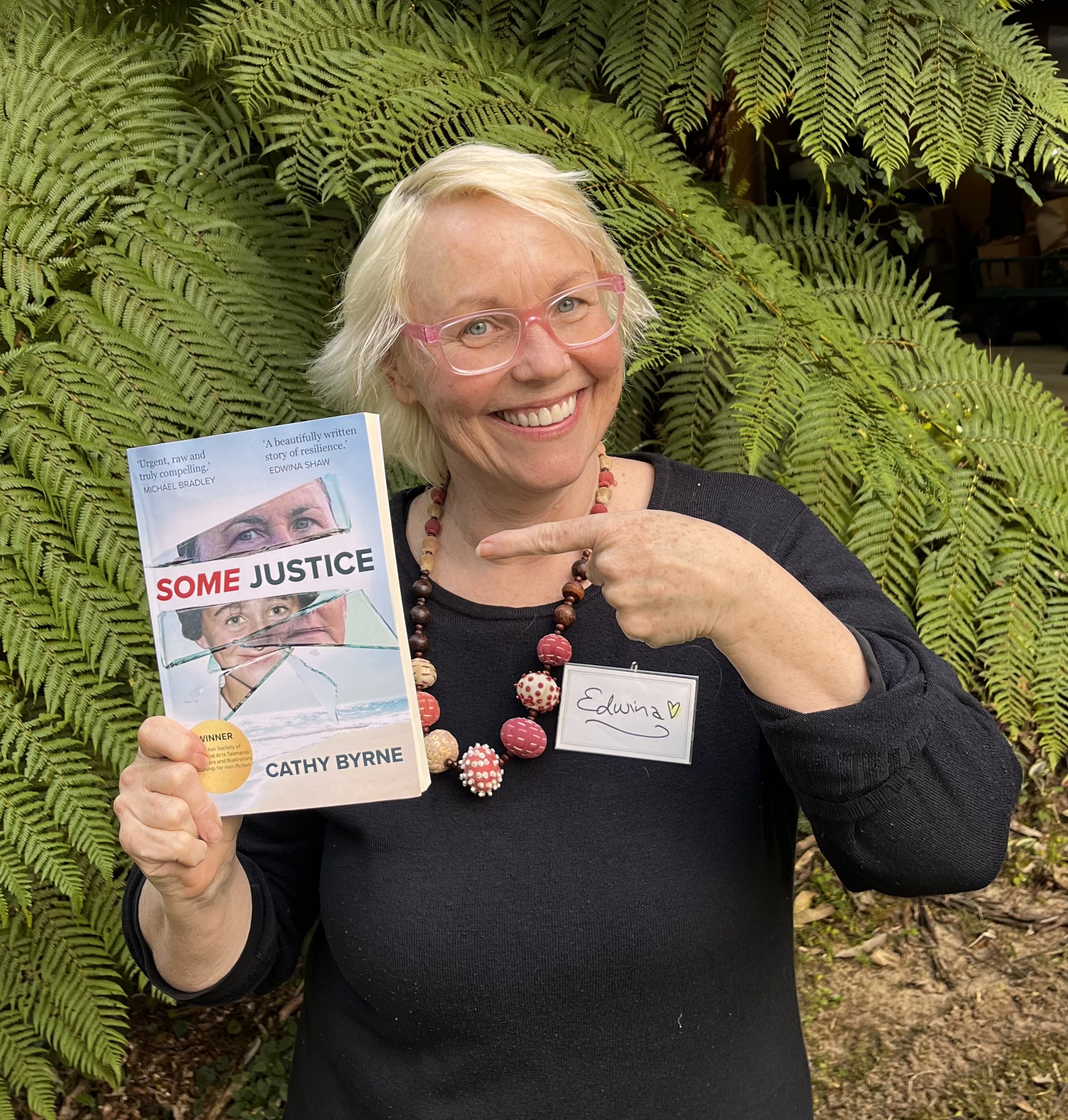
Cathy Byrne’s brave memoir Some Justice is her justice, the justice she was unable to find through the legal system which still does not hear the voices of children. Crimes against children often go unpunished because the voices of children are disbelieved, ignored or belittled. It takes a courageous adult to take that fight on for the child they once were.
Victims of childhood sexual and other kinds of abuse and assault are still asked, “What were you wearing?” as if any type of clothing or appearance somehow causes the crime. Blame of the victim is still rife. She must have done something. As if the perpetrators of the assaults were somehow controlled by the actions of a child.
They are not.
Cathy’s fight for justice for the abuse she suffered over many years at the hand of her teacher goes further than Grace Tame’s advocacy of child victims in that it shows the impact of childhood abuse, forty years later.
Abuse is not forgotten, it is hidden within the nervous system, which humanity is only beginning to explore and understand. And, because it’s hidden, grows larger and more powerful until, often at menopause, the wounded child erupts from the grown woman, full of confusion, rage and fear. If she has the courage, she fights for the justice denied her as a child. Cathy’s search for justice was not served well by the legal system as it now stands. Systems like state education departments have much more money behind them, yet the victim must risk paying the costs and, worst of all, first prove their own innocence.
My daughter once worked as a judge’s associate and attended many rape and sexual abuse cases. After these experiences she swore that she if she ever suffered a sexual assault, she would NEVER take a sexual assault case to court because she saw how very damaging and accusative the process was – retraumatising the victim. But what was she wearing? The victim blamed for the assaults, her whole lifestyle and clothing choices under examination. I don’t care if they walk around naked, they’re not inviting assault. It takes a strong person to stand up against not only their abuser but also to withstand the police procedures and legal interrogations.
I am reminded of “Lucky Lane” a brave story in Queersland by Robbie Phillips who writes powerfully about his assault outside a club in the Brisbane Valley and his treatment at the police station. Gay Liddington’s beautiful memoir, Will I Ever Be Who I Am? finds the justice she was never given as a child for the abuse that happened within her own family home.

The fight for justice isn’t only through the courts. As Gay knows, and Cathy’s book Some Justice relates, the fight is often also with the family of the victim who refuse to acknowledge the abuse or its incomprehensible impact, because of the part they often unwittingly played in it. All those mothers and fathers and brothers and sisters who looked the other way become angry with the victim and refuse to accept their truth because anything else is too painful. Writing for justice means your voice is heard even beyond family denials or minimisation.
It takes great courage to speak your truth and force others to see the crimes you experienced through your eyes. But you can!
In writing and publishing your story, your truth is finally heard. The length of the skirt you wore isn’t called into question. Your natural energy and attractiveness aren’t a cause of the assaults. Not screaming for help is understood because of the power imbalances and terror perpetrators take great pains to instil in their child victims.
In many ways, for victims of childhood sexual crimes, until the legal system is reshaped from its original patriarchal model, Writing for Justice is the only way to have the voices of victims truly heard. The only way they can find Some Justice.
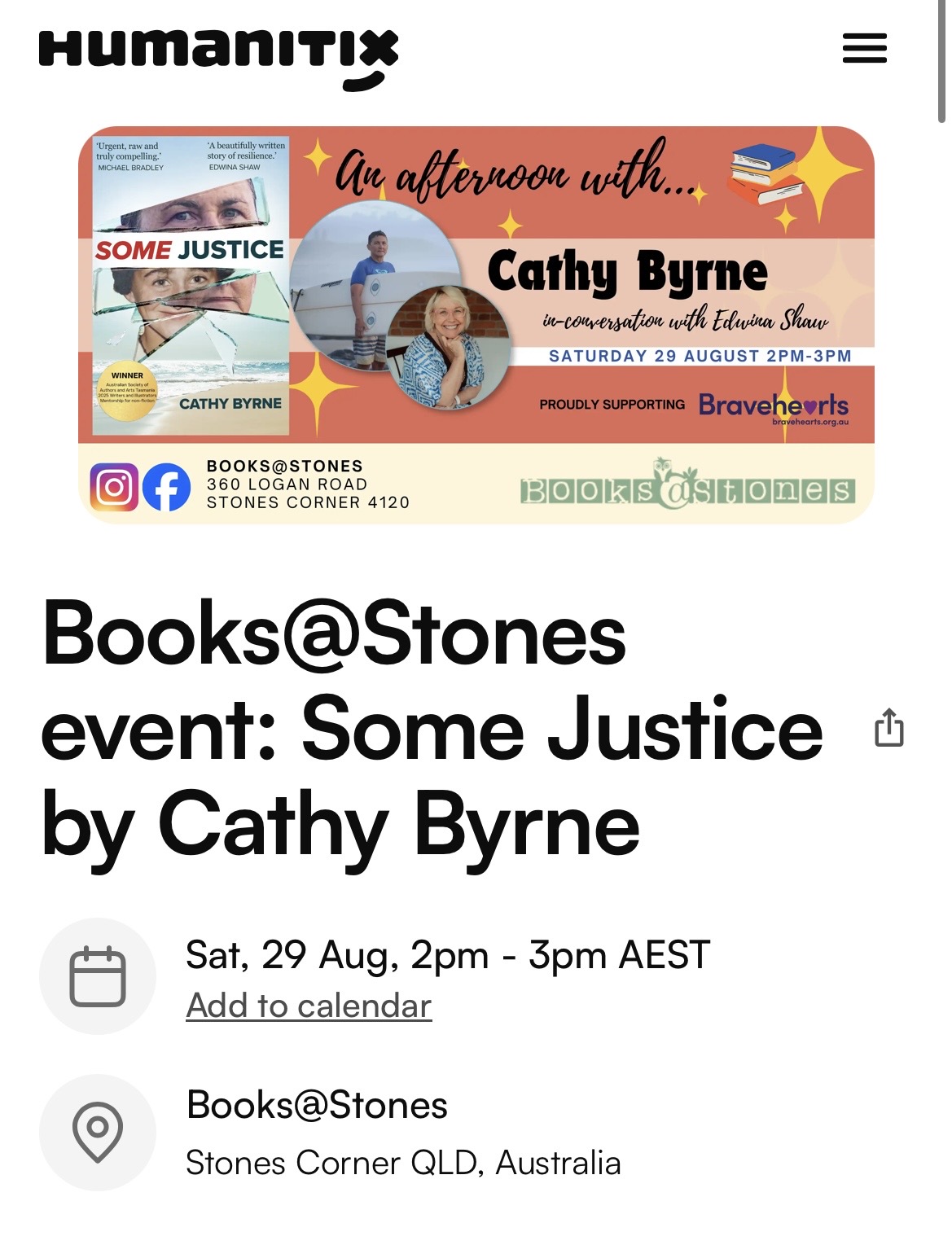
I’ll be launching Cathy’s brave and uniquely written memoir about her fight for Some Justice this coming Saturday 29 August at 2 pm at the warm and welcoming Books@Stones. The launch includes an opening address from Carol Ronken, Director of Bravehearts. Bravehearts is a leading Australian child protection organisation, dedicated to the prevention and treatment of child sexual abuse.
The event is free but BOOK HERE! You can grab a copy there or BUY ONLINE HERE.
See you there!
Lots of love
Edwina 🙂 xx
I’ll be at Indooroopilly Library from 10am on the same Saturday 29/8 for a Lord Mayor’s Writer in Residence Author Talk about Dear Madman. FREE but BOOK HERE


In our side of the world, this airline CEO decided trivializing rape/sexual abuse was fun, and is rightfully getting chewed out by all:
https://www.independent.ie/irish-news/michael-oleary-doubles-down-accuses-dublin-rape-crisis-centre-ceo-of-defamatory-comments/a/161245741.html
Oh dear! Not something to be treated lightly! Thanks for letting us know Alan 🙂 xx