One of the key precepts of Buddhism is that of non-attachment. If all suffering springs from desire then, the Buddha argues, we should free ourselves of desire, through non-attachment to things, people, situations, even our own creations.
The most famous example of non-attachment at work is when Tibetan Buddhist monks create intricate sand mandalas, some as big as rooms. The creation takes many monks many days, sometimes weeks. But as soon as the mandala is finished, it is swept away. Their magnificent creation turned to dust. The joy comes in the process of creating the mandala, they argue, not in the mandala itself.
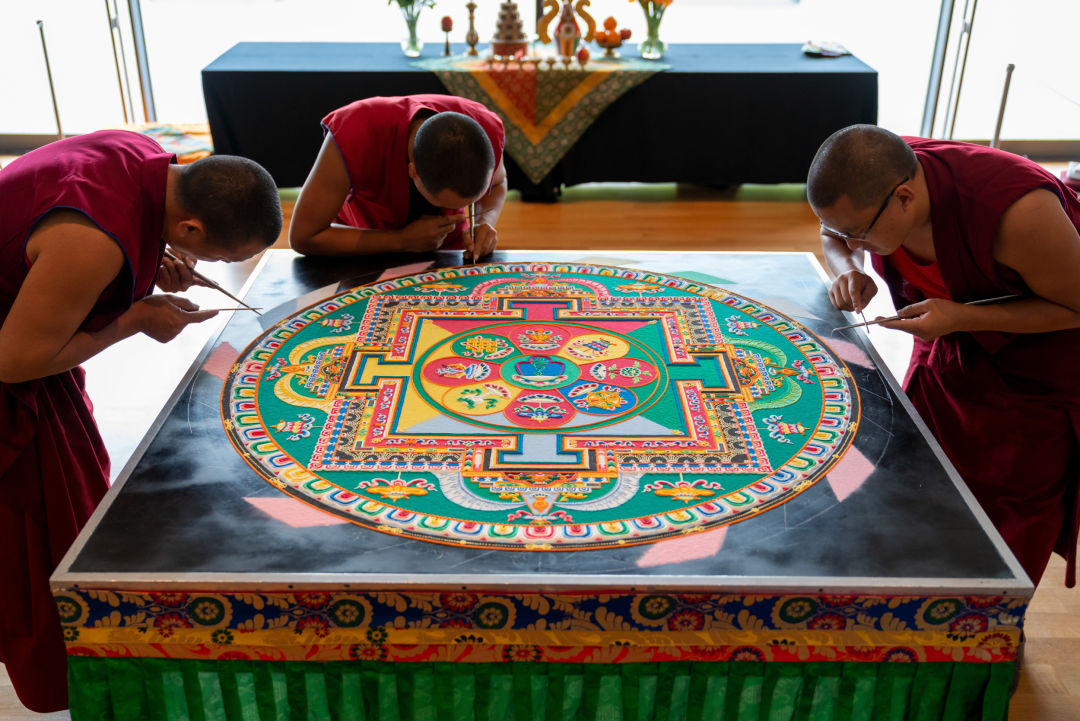
Tibetan monks at work on a mandala sand painting.
IMAGE: COURTESY OF ASIA SOCIETY TEXAS
As writers, a lot of the time, our work feels like this. We spend months, years, if not decades creating our own masterpieces, some of which may never see publication. Unlike visual artists who can hold an exhibition of their work every year or so and show the world what they have been creating, we writers must wait for the hallowed grail of “publication”. These days with the rise of independent publishing we too can share our work, but for those writers still waiting for the elusive goal of a trade publisher or producer’s commitment to their work, their novels/memoirs/screenplays may forever remain unseen.

Every time we send our stories out to a publication or competition it is an act of non-attachment. We send out our, to us, perfect work, to be judged or chosen. However, most of the time, it disappears into the ether, and we don’t even get the dignity of a response. This rejection/dismissal of our work hurts. To the sensitive soul of the writer, it cuts deeply.
So how can we free ourselves from this particular brand of writerly suffering? How can we detach from stories we have worked so hard over for so long? How can we find the joy in the act of creation itself, and let that be enough?
Over the past twenty years of writing and submitting work, sometimes I’ve got lucky, other times I’ve had strings of rejections. Sometimes stories that have faced strings of rejections then find a good home, without a word changed!
Really, all we have power over when it comes to this most difficult part of a writer’s life is our attitude. In Big Magic Liz Gilbert talks about not putting too much pressure on our writing by expecting it to pay the bills. In Australia, if writers had to rely on book sales paying our way, we’d all be starving. So take that pressure off. Find another gentle way to bring in the cash, that still leaves you some time and energy for the joy of writing.
And then, free yourself of the burden of expectations. Continue sending your stories and books out but know it’s all a lottery. A rejection doesn’t mean your work isn’t good, only that the random person reading through the slush pile can’t yet see its beauty. This writing game can be a grand adventure if we let it be. If we think of it as a game. Send things out, but expect nothing. If you write, you are a writer. You need do nothing more.

Recently I reprinted my A Guide Through Grief which now has distribution throughout the Australian market, including in bookstores. When the boxes arrived, I cut one open to smell and feel my new edition. The cover looked great! I flicked through the pages and noticed something wasn’t right. I opened at what should have been the first page to discover page 55! Ten pages later I found the opening. Ten pages after that was page 180! All 300 copies were the same. A total mess. I had to laugh.
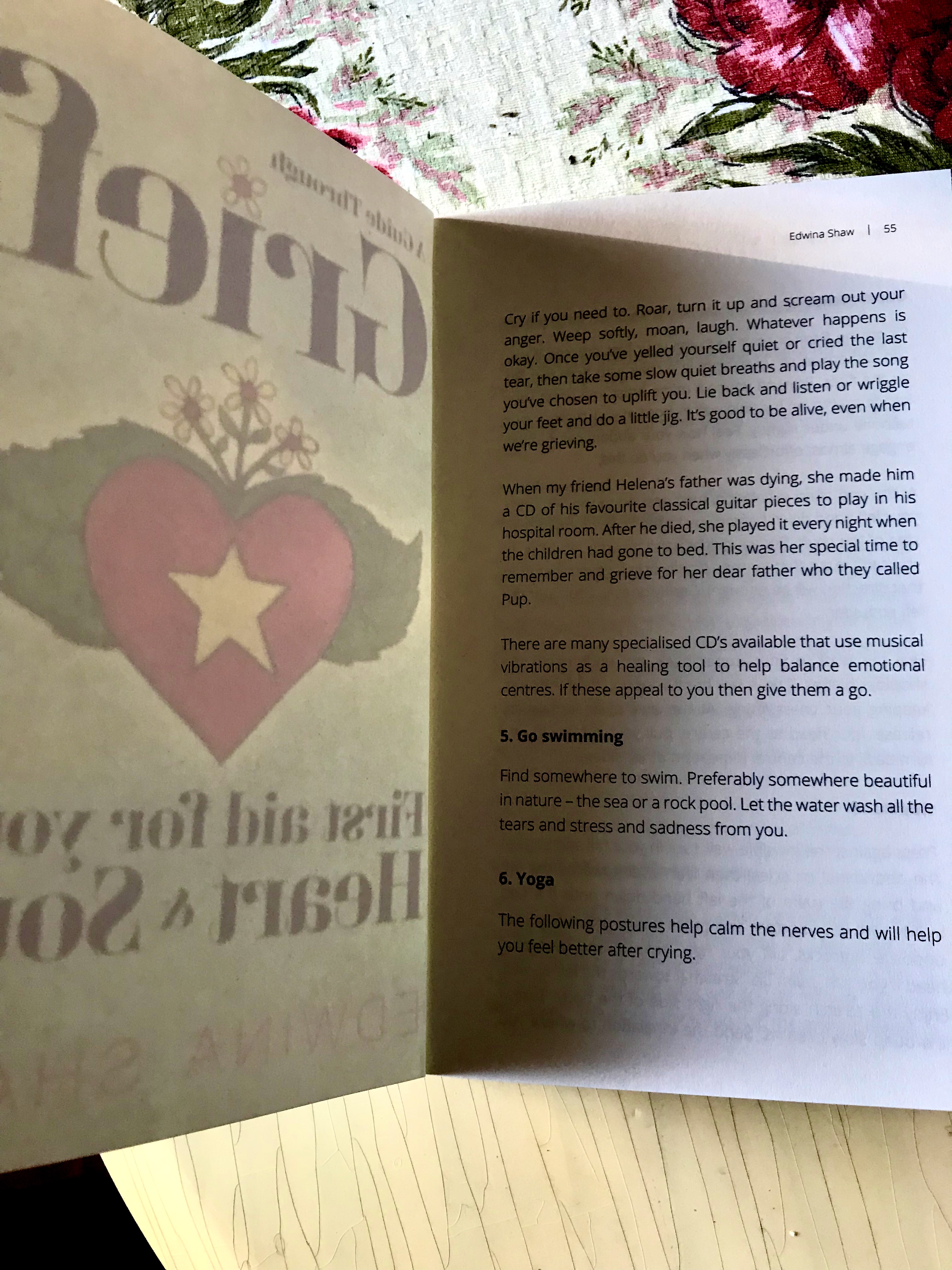
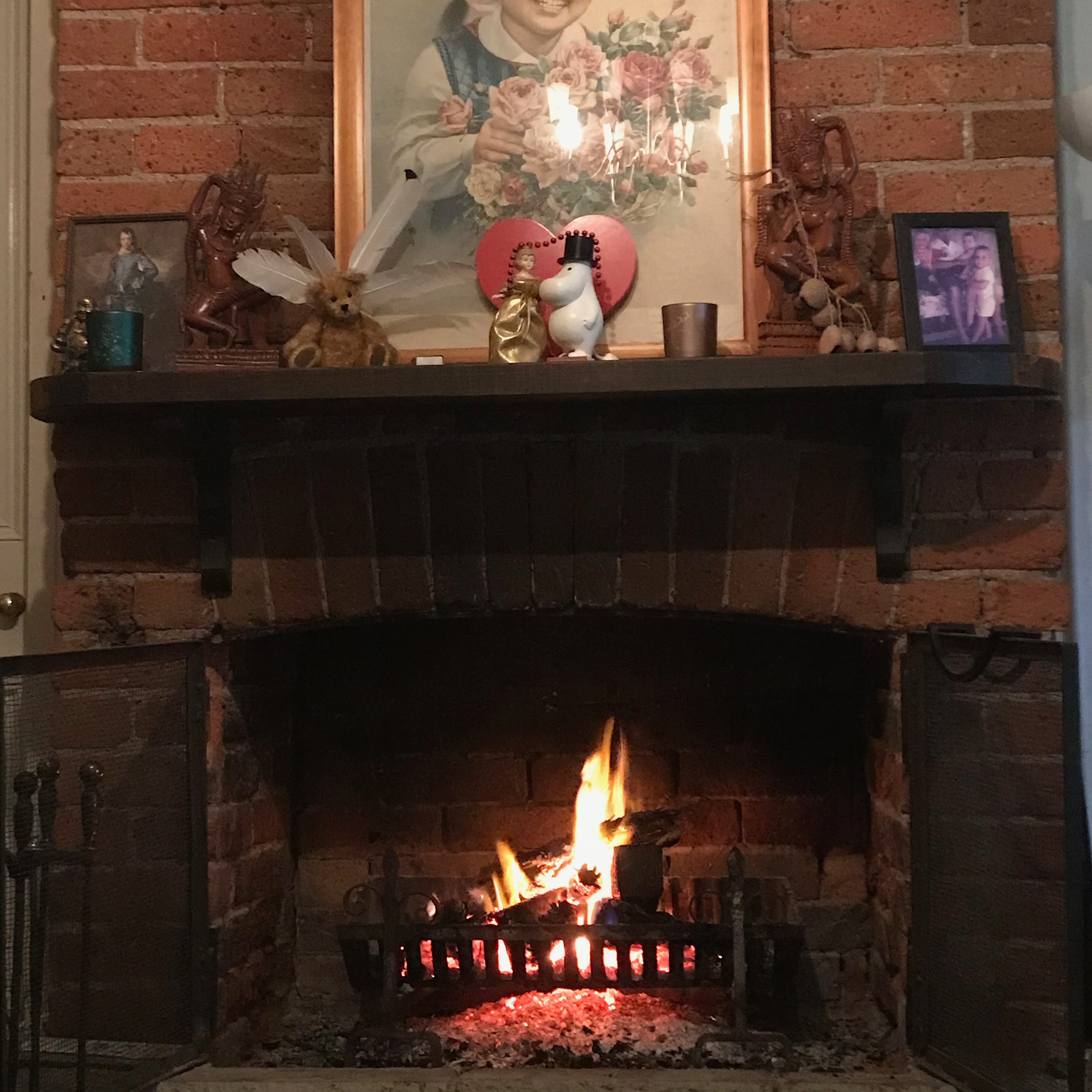
Ever since then I’ve been practising non-attachment with all the misprints. I could have just thrown them in the bin, but I didn’t. Instead, I’ve been devising ingenious ways to use my words. I remove the covers and use them as postcards. The insides make great garden mulch and wonderful kindling for my fire. I could line jackets with them to keep me warm. Leave the odd copies on train stations to spark curiosity. Donate them to schools and get the kids to solve the puzzle of putting the pages back in order.

As I’ve torn off the covers and fed my words to the flames, I’ve pondered the nature of non-attachment. The writing of the Grief Guide brought me healing as I recovered from the loss of my baby boy and earlier losses of my father and brother. The process of writing was what healed me. Not the publication.
We learn and grow as we write, often accessing another state of being as we immerse ourselves in the process. It is THIS PROCESS that is precious, not the printed page.
It doesn’t mean I’m not going to keep sending work out, that I didn’t demand a free reprint of my Grief Guide order for the stores, because I still want readers for my work. I still want to help people through my stories. But after ripping apart hundreds of books with my name on the cover, it all seems less important. My words can also help my garden grow and keep me warm on cold winter nights.
So let go of your intense connection with your writing. Take the pressure off the work, and yourself. Know that you are on the right path, just by writing. The stories don’t have to go anywhere or do anything, except be written.
I hope that helps soften the blow of rejections. Create your beautiful mandala of words, then sweep them out into the world without regret.
With lots of love,
Edwina xxx
PS. Any ideas for repurposing misprints most welcome