Happy Christmas to you all! Yes tis the season to be merry and give thanks for the craziness this year has been. Amid all the frenzied buying and giving that accompanies the festive season, I thought it would be a good idea to treat ourselves to some things all writers really need.
So here you are – 5 Gifts to give yourself – all of them you can get for FREE!

1. A BOOK! – Writers love to read and it’s important that we all support each other by buying and borrowing books to help keep the publishing and bookselling industry alive and thriving. Besides what’s better to do than to laze a day away tucked up with a good read? My favourite books by Australian authors this year have been Melissa Lucashenko‘s Too Much Lip, Trent Dalton‘s Boy Swallows Universe, Favel Parrett’s There is Still Love, Amanda O’ Callaghan’s This Taste for Silence and I’m very keen to get my hands on Amanda Neihaus‘s The Breeding Season. I also really learnt a lot from Joanna Penn‘s book Business for Authors. How to Be an Author Entrepreneur. Joanna has a number of practical guides on building a writing career worth checking out. Always good to invest in books about the craft and business of writing as well as feeding our creative side with quality works of fiction. And some just for fun too. Oh, and of course if you’re into social history – Bjelke Blues is a cracking good read 🙂 Need it to be free – LIBRARY! Best place I know to walk in feeling poor and come out feeling very rich indeed with armfuls of books, movies and other treasures.

2. AN EXPERIENCE – Any experience that makes your heart sing will do the trick. Dance with a friend and twirl your skirts. Sing some Xmas carols along with Bing. Go for a swim somewhere beautiful in nature, or a long walk in a snowy forest if you’re somewhere cold. Roll on the floor. Move your body. Visit the city and stare at all the lights till your eyes go funny. Laugh – catch up with old friends and have a giggle. Watch a funny movie and let yourself go. Sit by a river or with your back against a tree. Lie in the sun and feel the earth moving beneath you. Go outside at night somewhere away from city lights and look up at the stars – the very best Xmas decorations. Treat yourself to your favourite food – it’s Xmas – if we can’t feast a little then, when can we? Let go, have fun. Be silly!

3. TIME TO WRITE – Escape the festive madness, find somewhere quiet and write something just for fun, because it’s what we love to do. Play around with words. Stake a claim on a period of time each day which is just yours for whatever creative play you’d like to do. Remember we write because it gives us pleasure. Take the pressure off and just muck around on the page. Remember why you started this crazy writing adventure in the first place. It’s not all about publication (though of course that’s very nice) but about the fun of entering that creative zone and losing time because we’re so wrapped up in the story we’re creating.
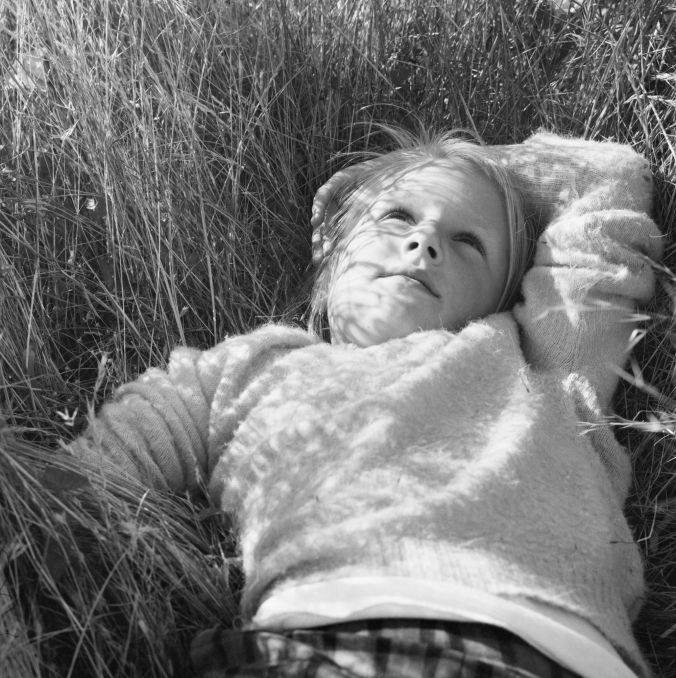
Dorothea Lange: Dyanna lying on her back in the grass circa 1961
4. PERMISSION TO DO NOTHING! – Yes, I mean it. Absolutely nothing. Stare into space. Stay in bed. Forget the housework. Forget the deadlines. Send the children, partner etc elsewhere at least for a few hours – then do NOTHING! This is trickier than it sounds. But staying still, watching clouds, listening to the sounds around you, you’ll start to really slow down. And don’t we all need that? Soon enough we’ll be running around like headless chickens again, but if at all possible make this Doing of Nothing a part of every week. Remember Sunday? It used to be a day when all work stopped. Everyone, all at the same time, slowed down and did very little. I miss it. This doing of nothing is something I’m really trying to embrace for the year ahead. It’s where dreams and story ideas come from.

5. LOVE – or at least some Sincere Affection! Be your own best friend, your own affectionate partner. Treat yourself with loving kindness. Speak to yourself gently and with encouragement. This writing gig is hard. You need a healthy sense of self-worth to cope with the inevitable rejections we face on the road to success. When you catch yourself speaking harshly to yourself, just ask, “Would I talk to my best friend like that? What would I say instead?” and tell yourself that. Loving yourself doesn’t mean you’re “up yourself” as we say here in Australia, it just means you want yourself to be happy and free from fear and harm. From that start we can learn to love the world!
I hope you found something on the list that feels possible and made you smile.
Here’s a little Xmas gift from me to you, also for free – my Xmas short story “Mrs Sunshine”. It was first published in Best Australian Short Stories 2014 (Black Inc). I hope you enjoy it.
And if you’d really like to treat yourself this Christmas then book into my next Relax and Write Retreat – March 27 – 29 2020 among the big trees and birds north of Toowoomba.

Happy Christmas from my backyard to yours. Have a wonderful holiday season. I hope it’s filled with joy and love.
Lots of love
Edwina xx


