WHAT MAKES A WINNING STORY? – Thoughts after judging the Marj Wilkie Short Story Award 

I recently judged the Marj Wilkie Short Story Award for the Society of Women Writers Queensland. Being invited to do so was a great honour as empowering women is a huge motivator in all I do. Women’s stories are important and need to be told. Our truths. Our fictions. Our lives now at last have a chance of being seen, as never before. 

As a writer also submitting to competitions, twenty-plus years after entering my first, with my own beginner’s luck well and truly expired, I took the job very seriously.

I’d previously judged the Gympie Writing Prizes and, every year as part of my work in the Creative Writing department at the University of QLD, I read and mark hundreds of stories, so I’m no stranger to the form, or to judging the quality of stories. My Masters thesis was on the short story and my first critically acclaimed novel, Thrill Seekers, started life as a collection of shorts. I’ve published over forty stories over the past twenty years, so I know how important every entry was to the writer who submitted it and was determined to do each one justice.

Photo by Min An on Pexels.com

I was impressed by the quality of the 101 stories submitted. The writers made my job tough. I know the courage it takes to submit, the courage it takes to write at all. Committing our ideas to paper is an act of bravery. I wished I’d been able to give everyone a prize just for getting that far. As with marking students’ stories, I wished I’d been able just to give feedback without having to make judgements. But I was the judge! No getting out of it!

Photo by EKATERINA BOLOVTSOVA on Pexels.com

I was moved by many pieces, laughed and cried. I read every story all the way to the end and had to really steel myself to let some go. I thought the initial cull would be easier, I’d be able to narrow it down to thirty or so just by rejecting the stories that weren’t any good. Pity was, they were all good! I was really impressed with the quality. Only a very few were dropping out. On my first read through, I started just doing a Yes or No system, but then I hit the story that became the runner up and wrote a big YES in capital letters beside it. 

Photo by Karolina Grabowska on Pexels.com

What was it that made it a big YES instead of a little one? Really it boils down to VOICE. This writer had a unique, strong and confident voice as a writer, so even though it wasn’t a genre I usually chose to read, this story SHONE. So, I started using the big YES culling method which got me to an initial long list of 30, then to a short list of 18. Some stories I read over and over before making a decision. 

Many stories caught my attention and were beautifully written, some needed a little finessing, (formatting is something many entries needed to work on), others were too light or didn’t resonate with me fully. As objective as I tried to be, all reading is subjective, and my own tastes and leaning towards social justice and women’s issues came into play. Mostly by the third read through, I was looking for the stories that shone – and showed themselves to me, bright and shining. But I was still searching for my number one when I read story 100 – and before I’d even finished the first page, I knew I’d found her. 

Photo by Pixabay on Pexels.com

Many stories made me laugh, congratulations to the comedy writers – we all need a laugh right now. Others were deep and moving, exposing the multiple challenges faced by women now and in the past. But the stories that made it to the winning categories and indeed the shortlist had one thing in common – a strong and confident VOICE. For some this voice comes easily, though my guess is they’re journal writers, for others it takes a lot of practice and time writing, to find that confidence and trust in your own right to express yourself in your way. I found too that stories that were slightly more experimental or those with some unique twist, like the runner-up’s hazy dream of a haunted shopping mall and the winner’s interweaving of a writer’s fictional narrative with her own lived experience, were standing out. 

Because of the way these experimental stories stood out from more traditional narratives, I’m adopting this as my strategy for story submissions – at least for the next few months (I try to have at least a few stories submitted at any time. See THE TEN POINT PLAN FOR PUBLISHING SUCCESS) – I’ll let myself play, experiment, try writing in different genres, letting in more magic, playing with the form. 

So that’s my main tip, for those out there submitting to competitions, be brave, play with the words, the form, the story. Create something that grabs the reader’s attention and won’t let go! Above all, PLAY!

I know, I know. Easier said than done, but I’ve really been enjoying allowing myself more room to play with my writing. To really let go and just see what happens. I love a good traditional narrative that drives us forward, but with short stories we can toy with that blurred line between experimental prose and poetry, or throw a couple of stories together and see how they resonate, or chop the story up and change the order. Be brave!

I hope that tip will help us ALL get luckier in our story competition entries. Also see my THING ONE AND THING TWO story method for more short story tips.

Fingers crossed. But first you need to be brave enough to write, then put on your big girl pants and SUBMIT! Shine bright writers. Keep writing and expressing your truth. Your stories heal the world. 

Have a go at writing something more experimental – you’ll have fun and, who knows, it may end up a winner!
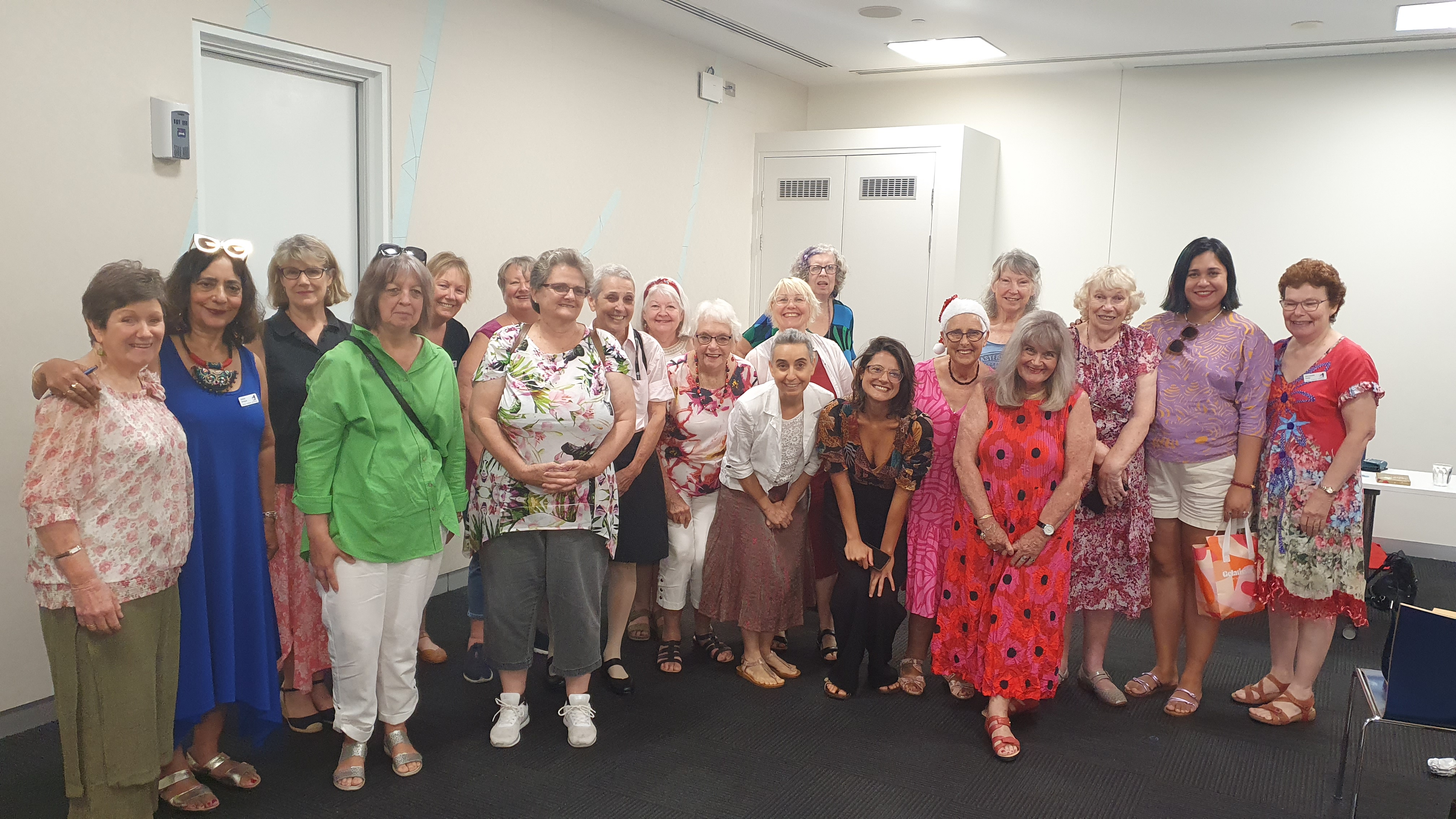
All the gang at the Women Writer’s Awards ceremony! Lots of fun!

Thank you to Indrani, Jan, Bernadette and Trudy and all the wonderful members of Women Writers QLD.

My congratulations to the brilliant winners! Results HERE

Lots of love

Edwina xx

PS. If you’re looking for a supportive writing group with meetings, workshop and even a retreat – then do get a long to a WWQ meeting!

WHO IS TELLING THIS STORY? Managing Point of View

But whose dream is it?

So, who IS telling your story? Whether you’re writing memoir, fiction or screenplay, you need to make important decisions about which characters you’re going to give a voice.

WHO IS YOUR PROTAGONIST?

Who is the main character in your story? 

If you’re writing memoir, even though many writers try to avoid it, YOU are the main character.  

If you’re writing fiction you need to decide whose story is propelling the overarching narrative – that character’s goals and battles to achieve them is what drives the story forward. They are your protagonist.

If you have multiple protagonists, one character must have slightly more say than the others – this is the character who begins and ends the story. Other voices can be almost as strong but the protagonist has the final say. In my book Thrill Seekers I have three protagonists, Brian, his younger brother Douggie, and Beck, their friend. Because it is Brian’s goal – to protect his brother – that propels the entire narrative, he is the protagonist. He has the first chapter and the last.  So think carefully if you’re dealing with multiple character voices and decide which one is the main driving force.

If you’re not sure about who your main character is, ask yourself “WHO HAS THE MOST TO LOSE?”

HOW WILL YOU GIVE VOICE TO THESE CHARACTERS?

If you’re writing memoir, mostly you will need to write in first person, and learn to embrace sentences starting with “I” or learn to cleverly avoid doing so. However, you will also need to include a reflective voice that I like to call, “Wise you now”, between the scenes bringing to life the past, staring “previous you”. You could write the scenes from the past in past tense first person and the reflective sections in first person present tense, or past tense too, depending on how you feel about present tense.

Fiction can also be written in first person, past or present tense, but managing multiple voices like this can be tricky. Thrill Seekers is written this way, each character is in first person present tense. My Cambodian novel, Child of Fortune has two main characters – an Australian traveller and a Khmer survivor of the Pol Pot regime. Both of these women are written in first person, past tense. These days however, due to the Own Voice movement, I would recommend writing characters from other cultures only in third person. I also advise against having only two main characters given voice. This is difficult to manage and becomes a tennis match with one character often overpowering the other. To remedy this, add a third character voice to bring more balance, a plait rather than a ping pong match back and forth.

Most popular in modern fiction is writing in closed third person, past tense. This is the simplest way to manage multiple protagonists. In closed third person, you write using he, she or they in separate chapters that alternate. This method allows for multiple viewpoints and clashing perspectives that has lots of scope for adding interest to your story. However, with closed third person, as with first person, you are confined to what that character has seen and heard and cannot stray outside this perspective.

My latest story, “Shadowman” (Dear Madman in a different incarnation) a literary true crime memoir/novel hybrid, is told in three alternating sections in three different perspectives. The first section is the first-person voice of “the writer”, the second voice is the Shadowman – also in first person. The third section is told in omniscient third person, with the voices of multiple characters, members of the Williams family. Omniscient voice is the “God” voice, enabling the writer to move between character’s points of view within chapters, though I keep them in separate scenes. Modern audiences find this voice confusing, and I must say I found it difficult to manage as well, though I got there in the end.

You can choose to write a character in second person too – the “you” voice – but eventually it becomes synonymous with first person, so is best left to short stories or short sections within your longer piece. It can be used effectively in memoir to give another’s perspective, eg You didn’t say anything. You walked away.

MANAGING POINT OF VIEW

Now you have chosen your POV characters and the voices you will use and how you will animate them, you need to establish the structure and the voices you want within the first section of your book. If you have three POV characters, and you want these voices to interweave (not have separate sections of the whole book – eg Part 1 – Anne, Part 2 – Bob, Part 3 – Grace) you need to set this up right from the start.

For example, Shadowman starts with a chapter from the writer, which establishers her as the main protagonist. The second strand belongs to the Shadowman, and the third strand is the omniscient voices of the family. All three voices have a chapter within the first 10 pages. This lets the reader know what’s going on, who is telling the story, and the pattern to expect right from the start.

AVOID INTRODUCING NEW POV CHARACTERS AFTER THE FIRST ACT

All rules are made to be broken and you can find many examples of characters joining the fray in the second act, or even third, but it is best to avoid doing this. Set up your POV characters in those first 10 pages and then stick with these characters all the way to the end – well one or two may get knocked off!

Avoid introducing new POV characters after act one, this only confuses readers. If you want to bring in a twist that introduces this new POV character, then at least foreshadow this possibility in the first act. Give us a hint that this may happen, mention their name, make them a part of the story in some way, even if they aren’t yet in the action.

Point of view is important to establish early, so the reader knows which characters they are following. Introduce important characters first up so we know whose side we’re on. Keep the number of characters manageable or add a glossary. But who wants to be checking a glossary all the time – except maybe Tolkien fans!

And if you’re writing short stories keep the number of characters low. The lower the wordcount, the lower the character count.

Introduce all characters and the way you will be telling their side of the story early. If you’re a new writer, stick to one voice, at least to start with. If you want to include other voices, closed third person in alternating chapters is easiest to manage, but all this needs to be set up right from the start. Build trust with your reader by showing them your plan and sticking with that plan. 

No randoms! No slipping between points of view without intention. Flag all changes in point of view so we know they’re intentional. 

Image by Jana Shannon.

Managing POV can be tricky, so think about it before you rush in, and have a rough plan about how you think it will work. It can be lots of fun writing in a few different voices, but make sure they are balanced, that they are each different and that your one main character has first say and the final word.

Hope that’s useful! GOOD LUCK!

Let me know how you go managing POV.

Lots of love

Edwina xx