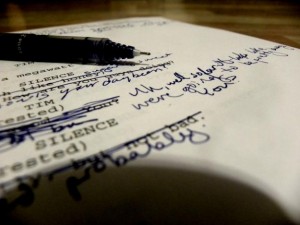
screenplay
A few months ago I sold the film rights to Thrill Seekers. I was thrilled, as I’ve always envisioned my stories one day being made into films. Once I was sent the screenplay and read it over, I realised that writing the scripts was probably something I could learn to do myself. It didn’t look so scary after all. Then I went to see Gone Girl at the movies and learned that Gillian Flynn had written the screenplay herself based on her novel of the same name. Not only that, she’d made it onto Forbes list of top-earning authors. That’s one list I’d like to be on, one day.
So, after searching the internet for information and scouring the books on script writing I’ve collected over the years, I sat down to make a start on my own screenplay for Dear Madman. Hmm, it wasn’t quite as simple as I first thought.
Much trickier in fact – a whole new art form for me to explore and play with!
Fortuitously, the QLD Writers Centre was offering a Feature Film Writing Clinic with Duncan Thompson, one of Australia’s foremost screenplay editors and teachers of the craft, and I didn’t even need to be an experienced screen writer to join. I did, however, have to submit the first five pages of my screenplay! With a lot of help from my friends I got that together and I’m in! The course starts in ten days and I’m super excited.
I’m fascinated by this new way of looking at story and enjoying every minute I’m working on my screenplay in progress. I’m back at that absolute beginner stage I remember from when I first started writing fiction over 12 years ago. It feels like PLAY and I’m having a ball. Maybe that’s why they call them screenPLAYS?
It’s also keeping me busy, so I’m not compulsively checking emails to see if the publisher has read Dear Madman yet!

 Edwina Shaw