WHAT MAKES A WINNING STORY? – Thoughts after judging the Marj Wilkie Short Story Award 

I recently judged the Marj Wilkie Short Story Award for the Society of Women Writers Queensland. Being invited to do so was a great honour as empowering women is a huge motivator in all I do. Women’s stories are important and need to be told. Our truths. Our fictions. Our lives now at last have a chance of being seen, as never before. 

As a writer also submitting to competitions, twenty-plus years after entering my first, with my own beginner’s luck well and truly expired, I took the job very seriously.

I’d previously judged the Gympie Writing Prizes and, every year as part of my work in the Creative Writing department at the University of QLD, I read and mark hundreds of stories, so I’m no stranger to the form, or to judging the quality of stories. My Masters thesis was on the short story and my first critically acclaimed novel, Thrill Seekers, started life as a collection of shorts. I’ve published over forty stories over the past twenty years, so I know how important every entry was to the writer who submitted it and was determined to do each one justice.

Photo by Min An on Pexels.com

I was impressed by the quality of the 101 stories submitted. The writers made my job tough. I know the courage it takes to submit, the courage it takes to write at all. Committing our ideas to paper is an act of bravery. I wished I’d been able to give everyone a prize just for getting that far. As with marking students’ stories, I wished I’d been able just to give feedback without having to make judgements. But I was the judge! No getting out of it!

Photo by EKATERINA BOLOVTSOVA on Pexels.com

I was moved by many pieces, laughed and cried. I read every story all the way to the end and had to really steel myself to let some go. I thought the initial cull would be easier, I’d be able to narrow it down to thirty or so just by rejecting the stories that weren’t any good. Pity was, they were all good! I was really impressed with the quality. Only a very few were dropping out. On my first read through, I started just doing a Yes or No system, but then I hit the story that became the runner up and wrote a big YES in capital letters beside it. 

Photo by Karolina Grabowska on Pexels.com

What was it that made it a big YES instead of a little one? Really it boils down to VOICE. This writer had a unique, strong and confident voice as a writer, so even though it wasn’t a genre I usually chose to read, this story SHONE. So, I started using the big YES culling method which got me to an initial long list of 30, then to a short list of 18. Some stories I read over and over before making a decision. 

Many stories caught my attention and were beautifully written, some needed a little finessing, (formatting is something many entries needed to work on), others were too light or didn’t resonate with me fully. As objective as I tried to be, all reading is subjective, and my own tastes and leaning towards social justice and women’s issues came into play. Mostly by the third read through, I was looking for the stories that shone – and showed themselves to me, bright and shining. But I was still searching for my number one when I read story 100 – and before I’d even finished the first page, I knew I’d found her. 

Photo by Pixabay on Pexels.com

Many stories made me laugh, congratulations to the comedy writers – we all need a laugh right now. Others were deep and moving, exposing the multiple challenges faced by women now and in the past. But the stories that made it to the winning categories and indeed the shortlist had one thing in common – a strong and confident VOICE. For some this voice comes easily, though my guess is they’re journal writers, for others it takes a lot of practice and time writing, to find that confidence and trust in your own right to express yourself in your way. I found too that stories that were slightly more experimental or those with some unique twist, like the runner-up’s hazy dream of a haunted shopping mall and the winner’s interweaving of a writer’s fictional narrative with her own lived experience, were standing out. 

Because of the way these experimental stories stood out from more traditional narratives, I’m adopting this as my strategy for story submissions – at least for the next few months (I try to have at least a few stories submitted at any time. See THE TEN POINT PLAN FOR PUBLISHING SUCCESS) – I’ll let myself play, experiment, try writing in different genres, letting in more magic, playing with the form. 

So that’s my main tip, for those out there submitting to competitions, be brave, play with the words, the form, the story. Create something that grabs the reader’s attention and won’t let go! Above all, PLAY!

I know, I know. Easier said than done, but I’ve really been enjoying allowing myself more room to play with my writing. To really let go and just see what happens. I love a good traditional narrative that drives us forward, but with short stories we can toy with that blurred line between experimental prose and poetry, or throw a couple of stories together and see how they resonate, or chop the story up and change the order. Be brave!

I hope that tip will help us ALL get luckier in our story competition entries. Also see my THING ONE AND THING TWO story method for more short story tips.

Fingers crossed. But first you need to be brave enough to write, then put on your big girl pants and SUBMIT! Shine bright writers. Keep writing and expressing your truth. Your stories heal the world. 

Have a go at writing something more experimental – you’ll have fun and, who knows, it may end up a winner!

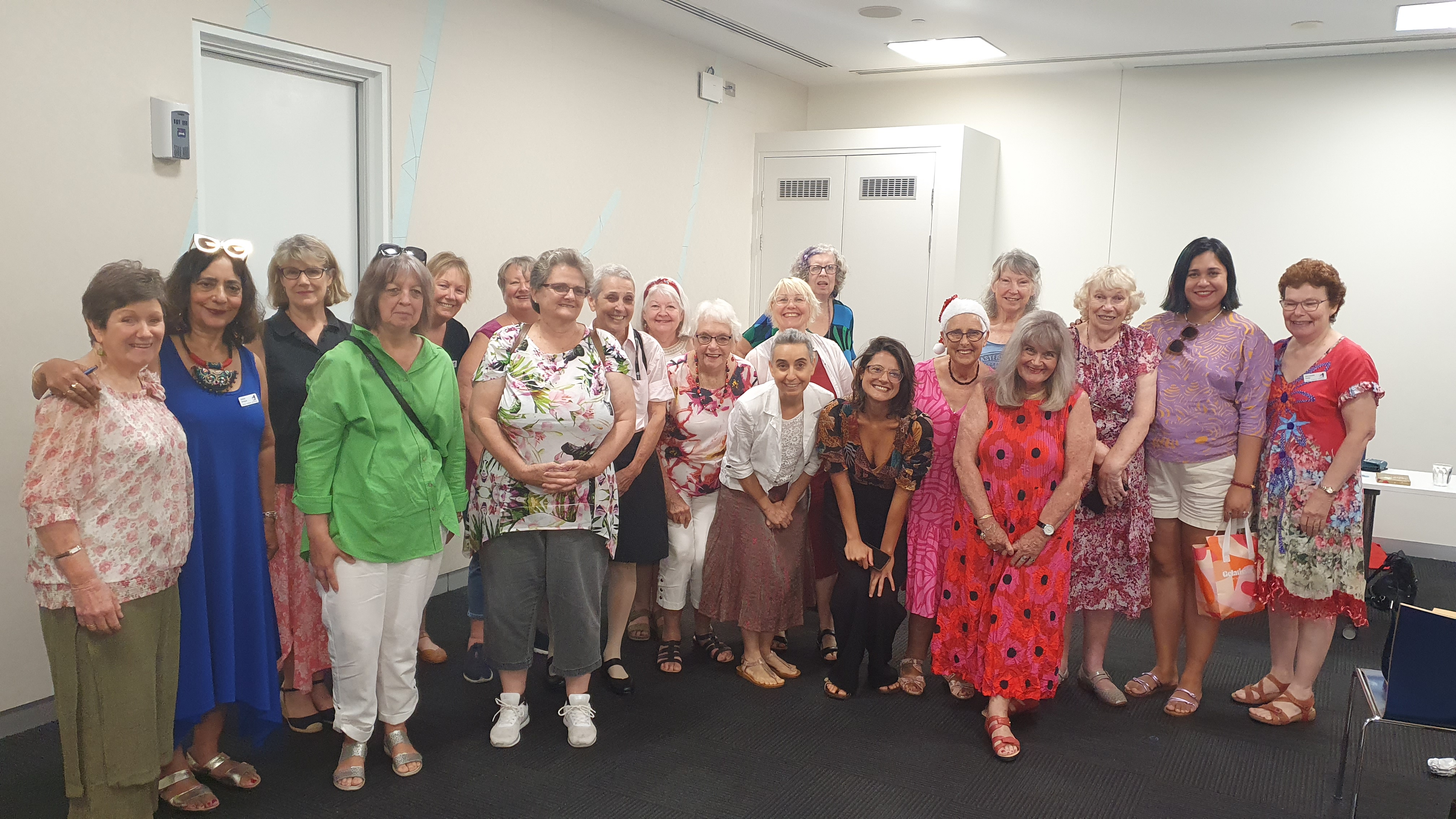
All the gang at the Women Writer’s Awards ceremony! Lots of fun!

Thank you to Indrani, Jan, Bernadette and Trudy and all the wonderful members of Women Writers QLD.

My congratulations to the brilliant winners! Results HERE

Lots of love

Edwina xx

PS. If you’re looking for a supportive writing group with meetings, workshop and even a retreat – then do get a long to a WWQ meeting!

NINE QUESTIONS FOR STORY SUCCESS

Is this you? Scribbling away on your story surrounded by books? Photo by Maria Maria Acha-Kutscher from Womankind magazine

Uta Hagen, an acting coach, came up with the following approach for actors, based on the Stanislavski method of inhabiting characters, which we can apply to our writing. As in my recent freaky character exercise where we imagine ourselves being in our characters’ bodies, this time too we’re getting right into the character’s mindset, but also thinking about their place in the entire story.

Whatever stage you’re at in your story, and whether it’s fiction, or memoir, ask yourself:

  1. What is the story about? What is it really about? Answering this pair of questions seven times will help you drill right down to the key message or themes at the heart of your story.
Another great photo from Maria Maria Acha-Kutscher.
  1. What is the tone/genre of the story? Are you writing a light-hearted rom-com, or a dark supernatural thriller? Even if you know your genre – drill down deeper to find the right tone. EG: you can have a quaint historical murder mystery, or a grim political murder mystery. Once you have this clearly in your mind, apply it to your story throughout. 
Depending on your tone or genre this tree could be a spooky evil spirit, or a kooky frog-like friend.
  1. Whose story is it? Which character is your protagonist? Even if you have multiple protagonists, one character will have a little more power than the others. See my article on managing point of view for more on this. This character’s journey through the story is the most important.
  1. What are the basic circumstances of the story (what has happened to the character, what is happening, and what will happen)? Remember your character must ACT! Action and movement, and character changes are not-negotiable if you want to write a story people will want to read.
  1. What does your character want? What is your character’s main story goal? To save the world? To find her daughter? To become a movie star? What is the outward goal, manifested in the physical world?
  1. What does your character need? What is their emotional or spiritual goal? On a deeper level, what is this character really yearning for. Often their physical goal will not bring them this. What will?
  1. How does your character change? What is their story arc? How do they learn and grow through the story? How can you show them overcoming their fears or weaknesses, and transforming them into strengths? 
Photo by David Radomysler on Pexels.com
  1. What is the main conflict of the story? Put simply, what opposition is there to the character’s goals – both their conscious and sub-conscious goals. See Suspense = Hope + Fear for more on this.
  1. What is at stake? If the character fails to achieve their goals, what’s the worst that can happen? It doesn’t have to be the whole world blowing up, but it does need to feel like that for your character. If they don’t destroy the comet the world will explode. If she doesn’t find her daughter, she’ll forever be heartbroken. If he doesn’t come out, he’ll live his whole life as a lie.
Photo by Shahadat Hossain on Pexels.com

Nutting the answers to these questions out before you start in can really help you narrow your focus and concentrate on what is most important to get across in your writing.

But really you can apply these questions at any stage of writing, second draft, half way through, 10 000 words in. Make sure there’s enough at stake and that you’re continually moving your reader between the hope that the character will achieve their goals and be happy, or the fear that they will fail and everything will be ruined forever. Make sure your character is taking action, not just reacting and make sure that no matter how good their intentions, sometimes these actions backfire and make everything worse!

Have fun playing with these! More next time.

Until then! Write like the wind!!

Lots of love

Edwina xx