CREATING QUEERSLAND: Tips for publishing anthologies.

Cover of Queersland

Late last year, I was doing some editing for my old friend, queer rights activist and all-round good guy, Rod Goodbun, who I met as part of the first Queensland Pride Collective back in 1990. He mentioned he’d like to create an anthology of stories from a wide spectrum of queer voices, and that he’d like to call it Queersland. “Great title!” I said. “Let me know if you need some help editing.” 

I mentioned Roddy’s idea to Matthew Wengert, the publisher at AndAlso Books that I’d worked with to create my first social history anthology Bjelke Blues, and he was keen. He also suggested we get an Arts Queensland grant to cover some of the costs and to enable us to pay contributors. 

Cover of Bjelke Blues

Fast forward past the arduous and odious days spend getting the grant together (that’s another book on its own!) and our great good fortune in securing funding for the project and… WHAM! We were on! Thank you Arts Queensland.

The process of collecting voices for the anthology began, with the aim of giving voice to as many of the different colours of the Queer QLD rainbow as possible, as well as covering some of QLD’s queer history (we have a story set during WW2) and the length and breadth and of this huge state.

An old photo of me and my old friend Stevie who has his first story in the collection!

TIPS FOR CREATING AN ANTHOLOGY

Here are a few tips for people wanting to create their own anthology around a topic/theme or subject.

  1. COLLECT CONTRIBUTIONS 

For Queersland both Roddy and I had a number of contacts who were either writers and/or had a good story to tell. We wanted to showcase established writers but also provide a forum for new and emerging voices and to record some of the history behind the queer movement that arose during and post the Bjelke-Petersen regime. We also wanted to ensure we had a strong First Nations voice and voices from cultures other than white Australia. Most importantly, we aimed to include a variety of writing and art. 

Queersland includes poetry, song lyrics, memoirs, personal essays, fiction, photographs and artwork. After our initial call out, we realised we had some important voices missing, eg Transwomen, so searched for these missing voices. Luckily, in my teaching capacity I meet lots of lovely people in workshops, so found a few of our missing pieces in my classes and leapt upon them with the lure of publication. For Bjelke Blues, I’d put an advertisement up on Facebook to gather extra pieces, but we didn’t need to do that for Queersland. We were also lucky enough to score a foreword from one of Queersland’s most successful sons, Darren Hayes, who grew up in Logan but went on to international music stardom with Savage Garden.

  • SELECT & EDIT CONTRIBUTIONS

Most of the stories were requested which took away the need for any rejections – the worst bit of doing anthologies. So once we had our stories in, both Roddy and I rolled up our sleeves and helped each writer polish their contribution until it shone. Stories from established writers like David KellyKris KneenKelly Parry and Steve MinOn, were a breeze. Other stories needed a bit more tidying, or tone adjustment, and others from brand new writers attempting their first pieces, needed a lot of back and forth. Our story from Aunty Dawn Daylight, Blak Queer pioneer and respected elder, was a longer process, with my friend Sitara interviewing Dawn over a few sessions, then typing up the notes, which I then shaped into the story you’ll find in the book. Most stories took more than one edit, so it was a long process, but worth it in the end. And, thanks to the grant, each contributor was paid.

  • ORDER STORIES

When ordering stories, we decided chronology would be the main shaping force of the collection, with oldest stories first. I wanted a light touch and a sense of humour for the opening piece though so chose a short pithy memoir piece from Evalyn Eatdith where she tells someone, “Buy a girl a drink before asking personal questions”. This made sense to me, as Roddy and I had bought the drinks for all the contributors and inside the book was the answer to very personal questions. 

In ordering collections/anthologies too, I always like to consider light and darkness, making sure any heaviness is tempered with a lighter story. We also wanted to have a good balance of masculine, feminine and non-binary voices. Our closing story is a timeless modern metaphor that resonates beautifully with Kris Kneen’s piece early in the book. Finding these echoes and resonance between stories is one of the joys of creating anthologies. Using these echoes and patterns to help order your stories also helps the collection feel more satisfying for the reader.

  • SELECT IMAGES

We were very lucky to have images from artists like Jackie RyanGarett HuxleyIvan Dyke-Nunn andAnge Bailey. When inserting images, a lot had to be sorted out directly with the printer, as good quality white paper is needed for the best reproduction of the artworks. This limited the number of images we could use and also where they could be placed.

  • ANTHOLOGY LAYOUT

After several rounds of proofreading – Thank you Tuesday! Thank you Georgina! – the anthology then went to our designer, the wonderful Susi Blackwell, who was also an inaugural member of the 1990 QLD Pride Collective. Susi designed an eye-catching cover and wrangled with the interior and fonts, and everything involved in making the book a pleasant reading experience. If you are creating an anthology with a large trade publisher, then all this will be handled for you.

Being from FNQ I wanted a cassowary on the cover – colourful, uniquely Queensland and a little bit scary – but a bush turkey will do!

  • MARKETING AND EVENTS

Luckily, we’ve been able to use grant funding to employ someone to help with organising our Queersland launches. The book is being released at the first launch in Brisbane at Come to Daddy’s on Friday 5th September – yup, not long! FULLY BOOKED. 

This is followed by a Melbourne launch at Hares and Hyenas at the Victorian Pride Centre on 18 September. 

On October 11, 2- 4 pm, we’ll be at Rosetta Books as part of the Rangebow Festival.
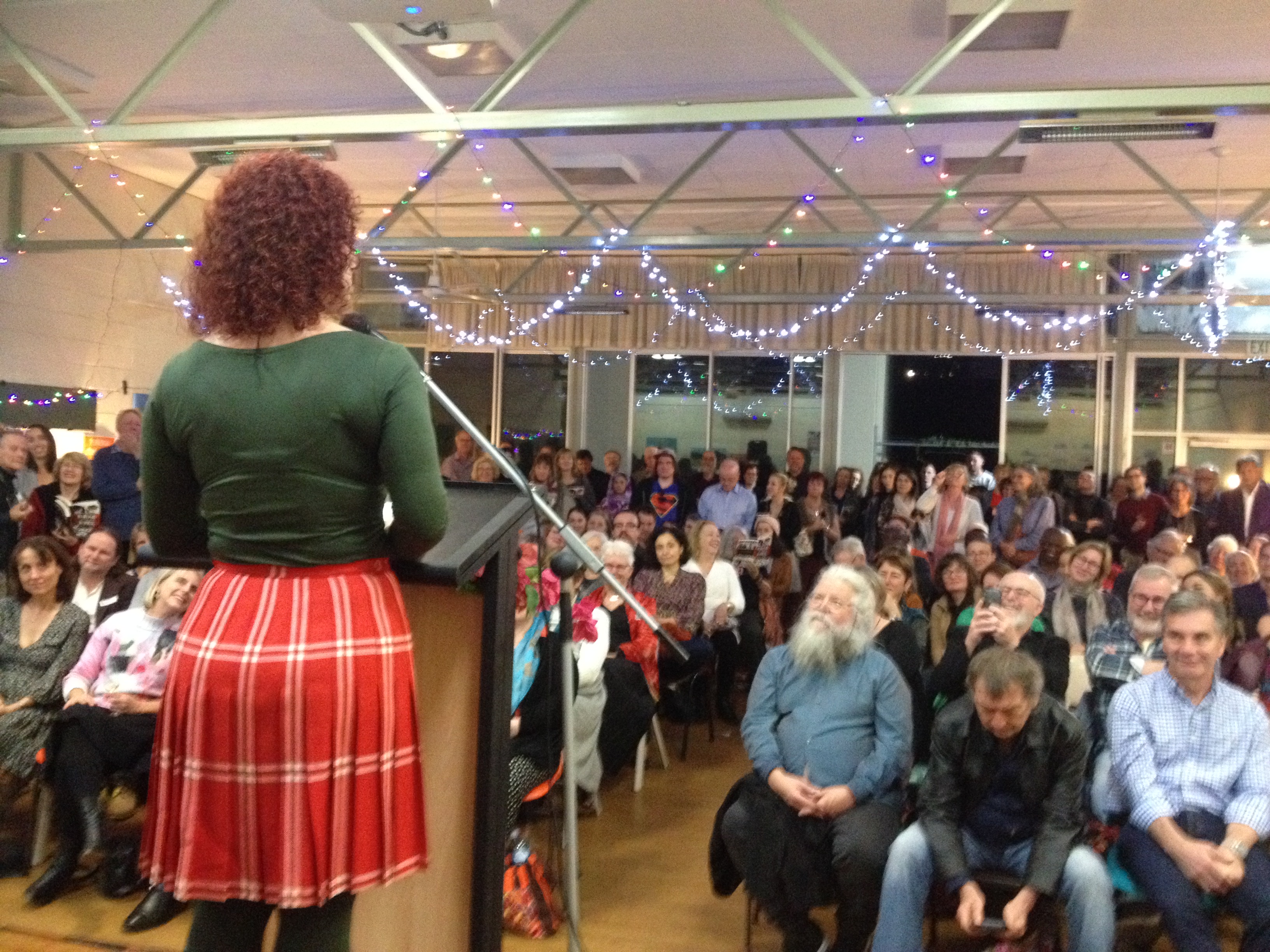
The happy crowd at the Bjelke Blues launch.

A fabulous panel led by Steve MinOn follows at the Brisbane Writers Festival on October 12 and then we’re at Avid Reader on Sunday 9 November at 3pm as part of the Melt Festival. 

On 24 November we will be in Sydney at Qtopia for our NSW event, and to top them all off we have two events at Woodford Folk Festival right over the new year! WOWZA! 

It would be wonderful to see you at any of these. Do come along and say hi!

Along with all these events comes marketing through reviews, interviews and articles etc. Whatever your anthology topic is, focus on that audience and do your own launches and talks/panels of voices from the collection at venues where you will find your readers.

I really enjoy creating these social history anthologies about aspects of Queensland that are often hidden or overlooked. It is a pleasure to provide a platform for voices that aren’t often heard and a publishing opportunity for emerging writers. I also get to publish stories of my own in them. Bonus! You can buy a copy of Queersland HERE – available now for preorder and from all good bookstores after September 5.
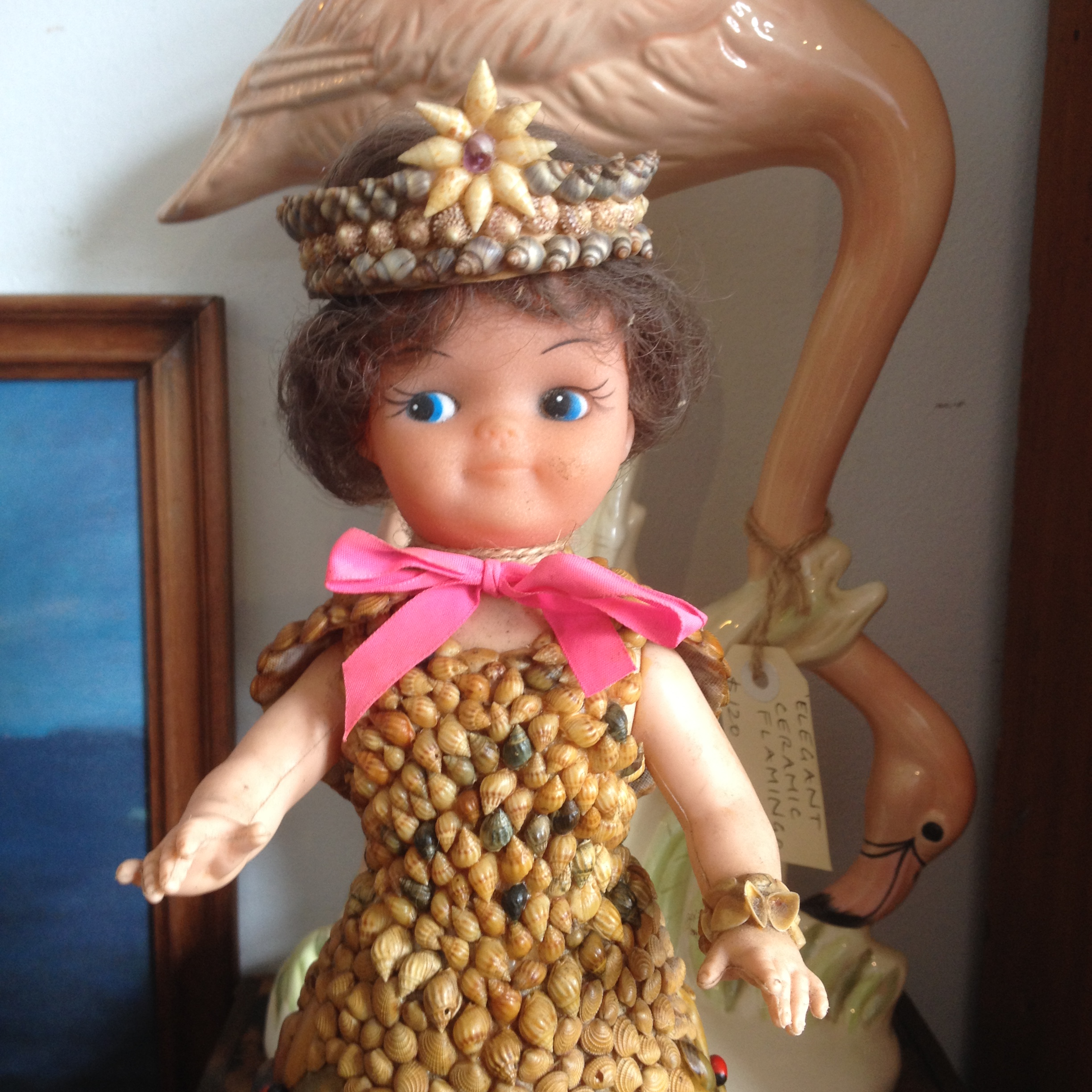
Have you got an idea for anthology? What topic, group or theme deserves multiple voices? What missing part of history needs to be recorded? Bear witness for your tribe.

I hope these tips will help you get started! Having a grant helps, but we didn’t have one for Bjelke Blues and the process was the same, just less money to play with!

In the meantime do get dressed up fancy and come along to celebrate Queersland with us at any of the events above!

Lots of love

Edwina 🙂 xx
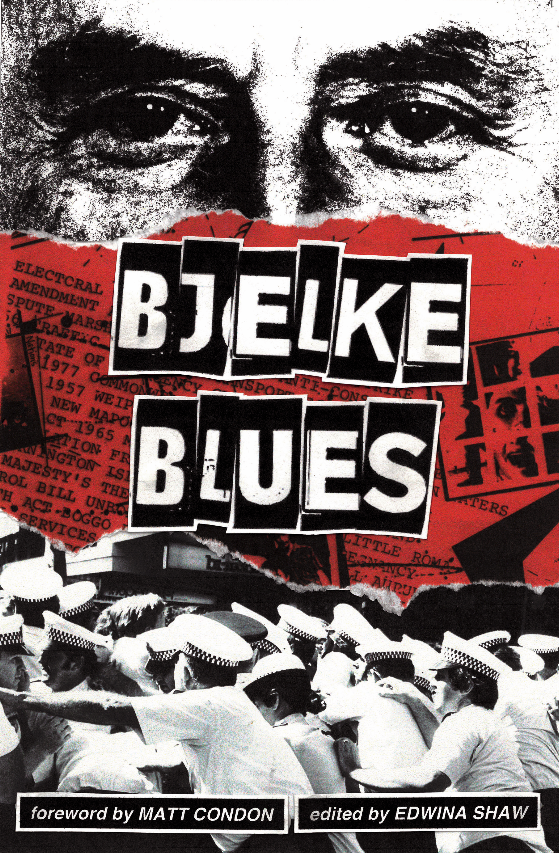
BJELKE BLUES


BB cover front page

My new book Bjelke Blues  – Stories of Repression and Resistance in Joh Bjelke-Petersen’s QLD 1968 – 1987 (ANDALSO BOOKS 2019) is about to be released. 45 stories essays and memoirs collected and edited by – guess who? Wonderful stories by wonderful writers including a foreword by Matt Condon, stories by Nick Earls and Miles Franklin winner Melissa Lucashenko, historian Raymond Evans, comedian Mandy Nolan, Indigenous activists Sam Watson and Bob Weatherall, UQ agitator Dan O’Neill, musician John Willsteed and many, many more.

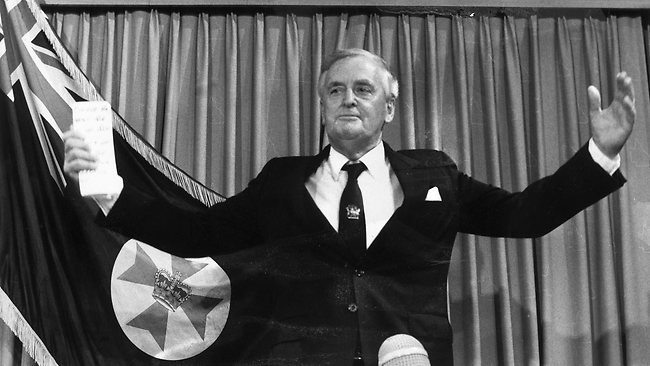
Joh Bjelke-Petersen – a hill-billy peanut farmer whose formal education finished when he was 12 – ruled my home state of Queensland from 1968 to 1987. For me and for all of my generation that meant that for us growing up he was some sort of weird king – the ruler of the ‘country’ of Queensland he called his own. Several times he tried to secede Queensland from Australia to make it his own kingdom. He would have loved that.

For almost 20 years he stayed in power, despite receiving only 20% or so of the vote through a notorious gerrymander. He drew electoral boundaries around left-leaning areas in wiggly jigsaw-patterns around the state. Funding went first to areas that voted for his party, then to the other members of his right-wing coalition, leaving next to nothing for Left wing Labor electorates. He used the police force as his own personal army giving them unprecedented powers to enter properties under the infamous Health Act. Bjelke used taxpayers’ money to fund his personal vendettas through the law courts. He once sued every member of the opposition party for defamation. Heard enough yet?

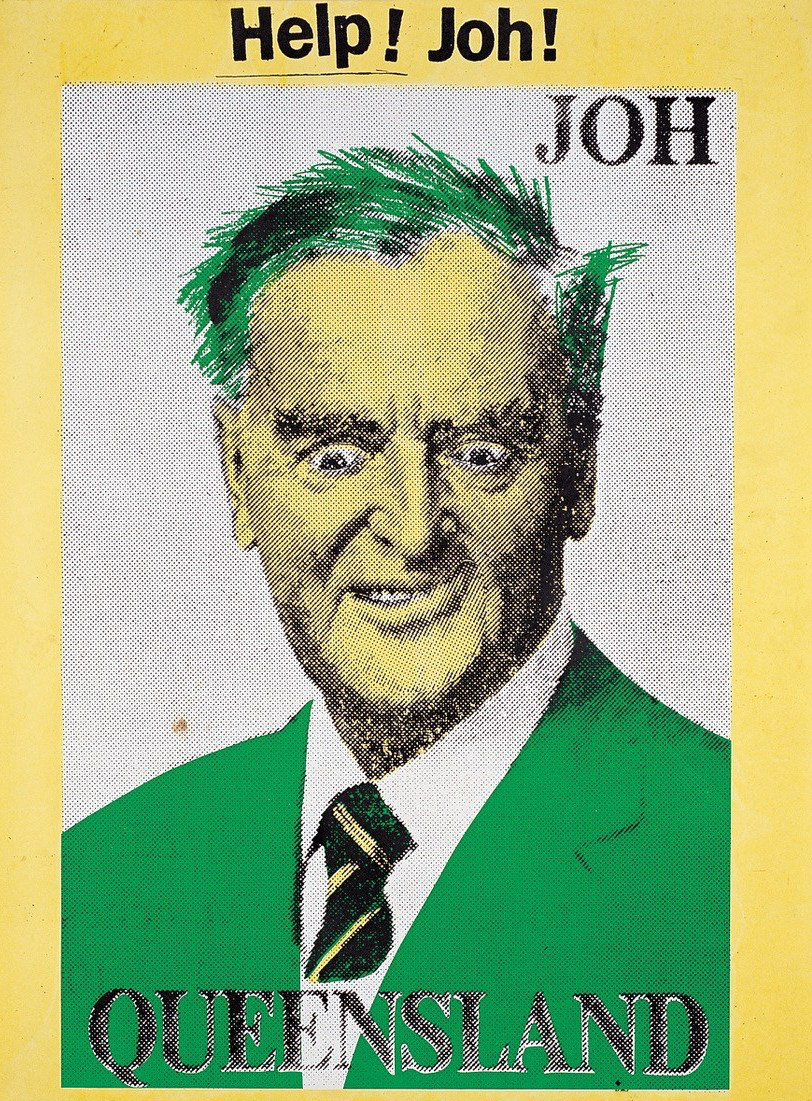
And through all of this obvious corruption – I won’t go into the rape of the environment, jobs for mates, and the police and government corruption that eventually brought about his downfall – through all of this, he appeared on television every night with his peanut-shaped head and blotchy skin, smiling crookedly, bewildering and amusing journalists with his own special brand of obfuscating banter. Remind you of anyone in power now? ‘Don’t you worry about that!’

Every night, just like Trump, Joh provided sound grabs that the media loved, and infuriated others. Still today though, many older people maintain a fondness for Joh, and believe he knew nothing about all the corruption and wrongdoing, the bribes. This is despite Joh narrowly escaping jail time on a technicality for his part in the corrupt activities of his government. Well-meaning people like my mother, who say, ‘Oh but darling he did a lot of good things too.’

774317-joh


I first started to doubt the God King of Queensland in my early teens when he referred to a female journalist as “girly”. How I hated that word! Then he told her not “to worry her pretty little head about that.” My blood boiled. In Australia’s other states and in other countries too, Joh was seen as a laughable buffoon, a joke. But life under Joh was no laughing matter.

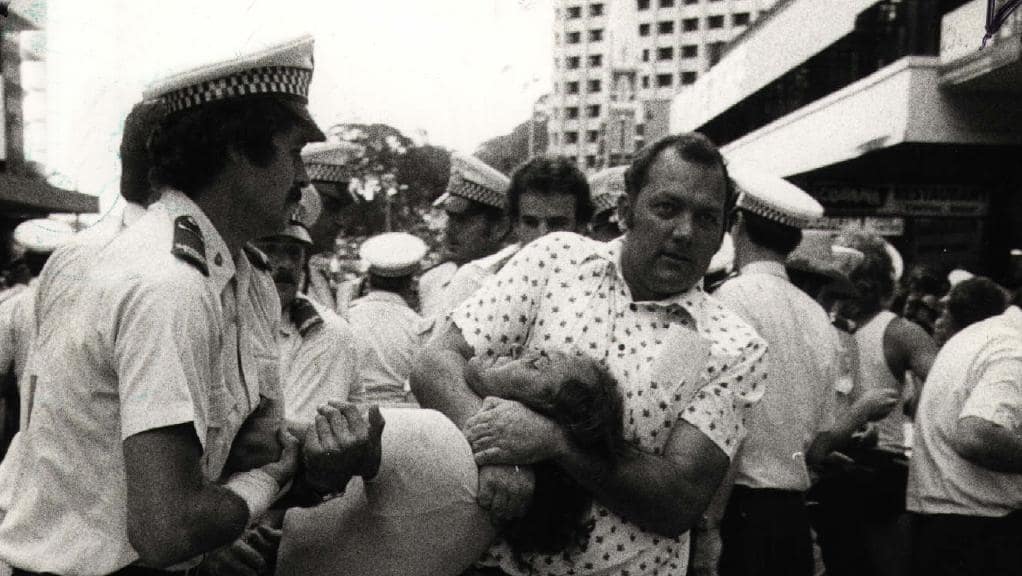
In my mid-teens as a baby punk, life under Joh was downright dangerous. In the early 80s, Brisbane city streets were completely empty after six at night – eerily empty. A ghost town. The only cars were police wagons that cruised the city blocks slowly like fat lazy sharks waiting to be fed. Waiting for someone who didn’t fit their idea of normal to step out of a bus – blacks, punks, hippies, greenies, queers, women. We all copped it. It was part of an average night out to be pulled over and interrogated just for looking different. You didn’t have to do anything wrong. They didn’t need an excuse. They were Joh’s personal army and their power was never questioned.


We learnt to never carry ID, to give false names and most of all not to be cheeky. It was hard though – Joh’s police were mostly so very stupid that most of the time they didn’t realise you were taunting them. But if they twigged – watch out! Queensland police were famous for late night bashings, especially of black people and gays. They’d take gay men up to Mt Coo-tha, bash them senseless then leave them for dead. They took young black people on long drives out to the edge of the city and left them there to find their own way home. They raided punk venues and gay clubs; batons raised. Hated hippies with a passion. Police bashings were so common they went unreported most of the time. Besides, who were we going to report them to – the police?

13d4fb4253d698d6c2de3ed10b8c845c

Drug busts became a weapon in Joh’s hands – a way of terrifying and controlling young people and the ‘intellectual Nancies’ he hated. The workers, the strikers, the students. Whoever he didn’t like. Under the Health Act your house could be raided at any time, turned upside down (read my story about getting busted here) and drugs planted. Drug offences carried heavy penalties for miniscule amounts, including jail – in Boggo Rd one of Australia’s most notorious prisons at the time.

Joh’s violent tactics against outsiders created a mass exodus to the south with some of our best and brightest intellects and creators leaving, never to return. Escaping Joh and his police thugs.

c0a294e6f841f29a4c0781a3eff784b4

It was a dangerous time to be young and different, but a whole lot of good came out of those years too. Our fight against a common enemy united many disparate groups that aren’t so united now and weren’t then elsewhere either. ‘Women, Workers, Blacks Unite!’ was one of the old street march chants. Queers and punks and artists and hippies and students too. Anyone who didn’t fit Joh’s fascist ideal of Christian youth was a target. Just being a university student was enough to brand you a troublemaker and a deserved victim of police raids. We all had files with our names on them. We were watched. Notes were taken. They knew where we lived. But still, even when it became illegal to gather in groups larger than three, we gathered to protest.

The University of Queensland was a centre for opposition to Joh’s repressive policies and through the leadership of people like Dan O Neill and Sam Watson (both contributors to Bjelke Blues) generations of young Queenslanders were politicised and radicalised. We all learnt what it was like to be branded “other” and joined forces with our “other” brothers and sisters. As Sam Watson says in his essay ‘An Equal and Opposite Force’ in Bjelke Blues:

Joh was a tyrant, and he was a criminal. He personified all that we were fighting against. But I’ll at least acknowledge, in that old basic physics formulae about every force being balanced by an equal or countering force, that perhaps if we had have come up against a lighter, less extreme political opponent, we may not have developed into the sort of freedom fighters we have become.

Help!Joh big

Through his oppression, Joh created formidable opponents.

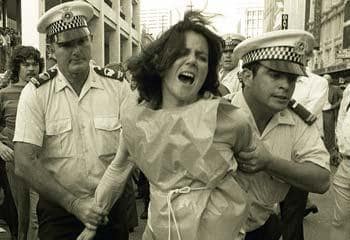
Forced underground, our art, theatre and music became radical, unique, and ended up influencing the world. We marched together side by side, punks and hippies, black and white, women and men, straight and gay, unionists, labourers and students, ladies in hats and gloves, priests and university lecturers. We marched side by side even after Joh banned marches and arrested protestors in their hundreds. We stuck together. “The people united will never be defeated!”

Joh gave us a common enemy that bonded us more than any benevolent supporter could have done. He created a close-knit family of outsiders and politicised us all. We certainly knew we were alive as we linked arms and faced off against the sea of blue shirts coming at us in waves, batons raised.

fullsizeoutput_366

And today as Trump echoes and amplifies many of Joh’s worst traits there are lessons to be learnt here.

The people united will never be defeated!

79-mayday after the march-02-f-Tim Gruchy

For more information of what it was like living in Queensland during the Bjelke-Petersen regime read the book!

Available in all good independent bookstores after August 23. Request it from your local store if they don’t have it. Available for pre-order here

Bjelke Blues  – Stories of Repression and Resistance in Joh Bjelke-Petersen’s QLD 1968 – 1987

Come along to the launch on August 23 at Kurilpa Hall West End 6 pm start. RSVP to attend.

Or

Join us at our special panel event at the Brisbane Writers Festival, Sunday September 8, 2 pm

Or

If you can’t make those, don’t worry we have another night full of speakers and fun at the wonderful Avid Reader Bookstore in West End on September 24, 6pm start.

If you’d like to learn more about the downfall of Joh’s government and the police and government corruption that was finally exposed, I highly recommend Matt Condon’s marvellous trilogy Three Crooked Kings, 2013, Jacks and Jokers, 2014,All Fall Down, 2015 and his latest about the criminal underbelly that thrived under Joh The Night Dragon, 2019

Matt wrote the foreword for Bjelke Blues and knows more about the dark hidden history of the Joh era than anyone.

Hope to see you at one of our events. A launch in Sydney is also on the cards.

Do come and say hello!

Edwina xx