These children were starving and abused, told they were rubbish
I’ve been working with Forgotten Australians – those who suffered institutional and/or out of home care as children – for several years here in Brisbane. But earlier this year, before COVID kept us all inside, I toured around my home state of QLD with program manager, Katie McGuire, facilitating workshops in regional centres.
As with all of my work with these extraordinary survivors, I was blown away by their stories and their resilience and willingness to try everything I threw at them.
We called our workshops The Healing Power of Story and part way through our travels were interviewed by local ABC media.
It is a great privilege to be able to contribute even a little towards helping these incredible people heal the pain of their traumatic pasts. As I say in the interview, once I met them, there was no way I could ever leave them.
They were trained to be domestic servants or labourers and given very little formal education
People like the Forgotten Australians exist in every community. Here in Australia they have been recognised and services like Lotus Place are now available to them, but in many countries this is not yet the case.
Being with them has taught me to never, ever, walk past a homeless person without a smile and a hello. To never judge a book by its cover and to always listen and wait for a story to unfold. You never know what hell a person has been through.
And yet they’ve managed to come through with wide open hearts and great kindness of spirit.
Lotus Place and other similar organisations are always looking for volunteers to help out with programs like these, so do get in touch if you’d like to contribute.
Are you stuck in telling mode and don’t really know how to make the radical leap into writing scenes? Telling is easy, we tell people our stories every day when we get home. However, you’ll notice that gifted story tellers, those we love to hear stories from, paint a picture with their words. They include setting details and dialogue and make us feel as if we were really there too. That’s the trick when we move from TELLING to SHOWING.
Our job as writers is to make our readers feel as if the story is real, happening in real time, that they are experiencing it. When we bring our stories to life with setting details, action and dialogue, we make our stories feel as real as possible.
But how do you write a scene?
It’s really not that tricky.
Start by writing your first draft of your whole story – don’t worry whether you’re telling or showing. Go for it, tell as much as you like, just get those words and basic story ideas down onto the page. Create your big baggy first draft to sculpt your finished story from.
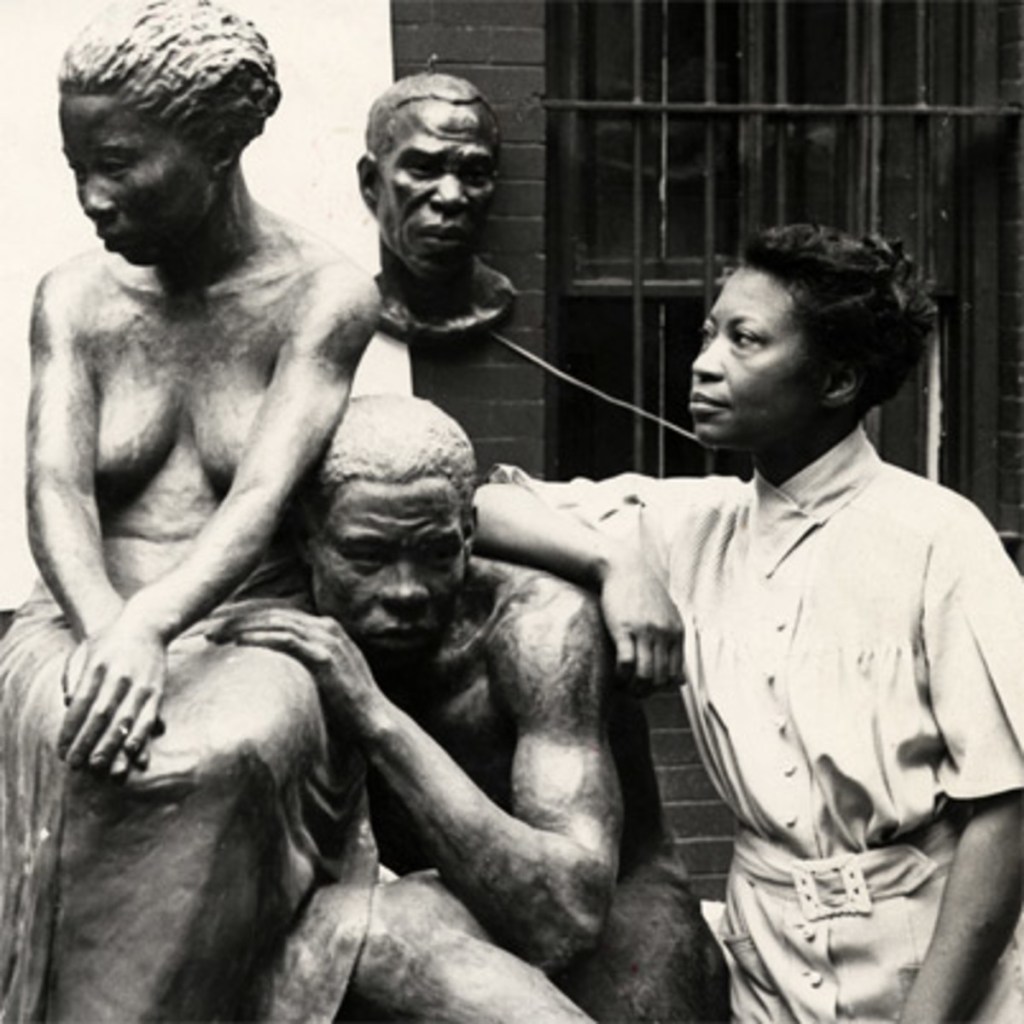
Augusta Savage, trailblazing artist
Then once you’ve had a chance to separate from the story a bit, go back and find places within that big baggy draft where you were telling rather than showing. Or if your whole piece is stuck in telling mode, then find a key turning point in the action or an interaction between characters that feels important and get ready to turn it into a scene.
ARE YOU READY?
Let’s do it!
First, spend a few minutes with your eyes closed envisioning the scene as if it’s on a movie scene, taking note of how it’s all unfolding as if you’re the camera.
Think about each character in the scene. What does each one want from this scene? Each character wants different things, so thinking about this early will help you build conflict.
Think about the conflict in your scene. If there isn’t any, there should be, so dream up some point of difference to generate more energy and forward motion.
Now write your scene.
6 EASY STEPS TO WRITE A SCENE
Where is it taking place? This is your setting and it’s important to ground your reader in that setting at the opening of your scene. Find a few specific sensory details that give us a good idea of where and when we are, and perhaps even demonstrate an aspect of your character, or the mood of the scene, or both.
For example: It had rained all night that summer of 1852 as The Enforcer wound its way between the outer islands of New Guinea.
2. Who is there? Your characters, that’s who! Now show your character or characters doing something in that setting, preferably doing something that demonstrates who they are and what they want from this scene.
Example: Fred the cabin boy clung to the ropes as he climbed up the rigging to the crows-nest, cursing the captain under his breath for sending him up.
3. What is going on? What action is taking place? How is this scene furthering your plot? Remember that ACTing is the main job of a charACTer.
Example: From the lookout Fred saw the sun’s glow leaking out under mounds of cloud. They were steering perilously close to a storm with all sails flying. The captain was a madman. A wave crashed against the merchant ship and almost sent Fred flying, but he grabbed hold of the mast as it swung and lurched, creaking.
4. Add some dialogue. Some folk find writing dialogue very tricky. My best advice is to just write any old blather that comes into your head and then later edit it down to be as minimal as it can be while retaining meaning. Make sure your characters speak at cross-purposes, all following their own agendas.
Example: Fred called down to the captain at the wheel, “Storm ahead! Pull in the rigging?”
“You giving orders now? I’ll have your hide. Just keep your eyes out for rocks boy!” the captain roared up.
“But the storm!”
“No storm’s ever stopped me.” The captain turned the wheel hard left, heading straight for the black-bellied clouds.
5. End the scene on a cliffhanger. Don’t tie up all the ends but leave the reader still needing to find something out. For example, I wouldn’t show the ship reaching the storm in this scene, only that Fred was very worried and in danger.
Yosemite National Park USA
6. Follow with a scene not immediately answering that question. For example, to increase suspense, instead of going straight to the ship in the storm scene, I’d perhaps do a flashback scene of Fred being punished by the captain earlier, wrongly accused of stealing bread. Rations are low. So not only is there a storm coming but we know the captain and Fred have a troubled history, and not only that, the ship’s rations are dangerously low.
Following those 6 easy steps should set you on your way to writing in scenes. Use all your senses, make sure your characters are DOING not just THINKING, add dialogue and build suspense.
I hope my ideas have helped demystify writing in scenes for you. Let me know how you go.