Look! Who’s Talking? Managing Points of View in Your Stories

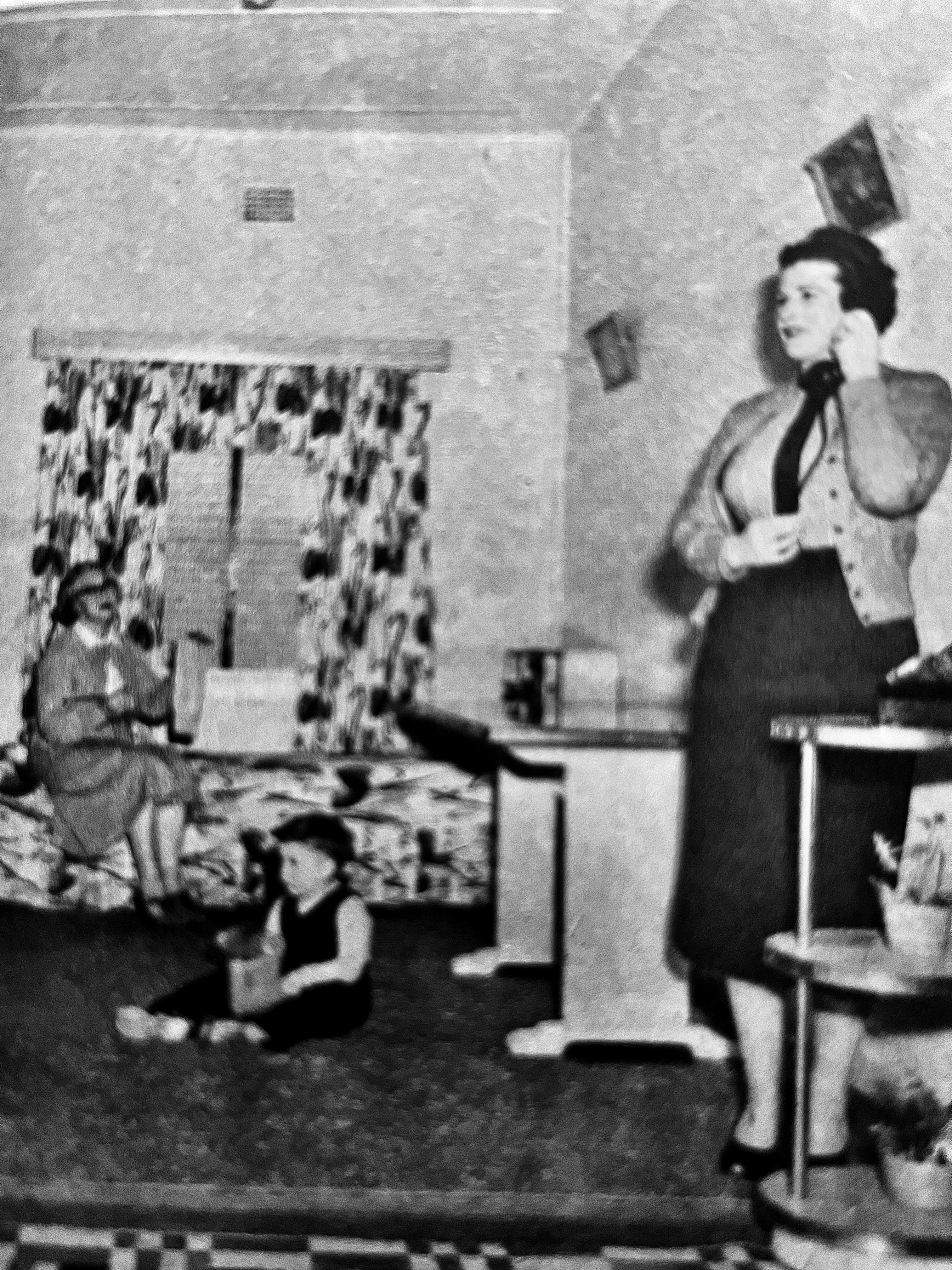
Who’s talking? How many POV characters can we have? We have the woman on the phone, the older woman and the boy, plus the person on the other end of the phone line. Which one has most to lose? Who do we need to hear from?

Writers make choices all the time. One of the most important choices we make is who we choose to tell our stories. Selecting our ‘Point of View’ characters, or ‘Focalisers’ shapes the impact, focus and tone of our books. 

How do you choose which character will be your protagonist? Who will readers align with most? Whose actions and emotional epiphanies will lead the story and shape the plot? What other characters provide necessary juxtapositions to that viewpoint? What other insights can be gained from lesser characters and their perceptions of the protagonist?

William Faulkner’s As I Lay Dying was one of the first novels I read that demonstrated how effective multiple viewpoints of the same situation can be. In this short novel, Faulkner examines the death of a patriarch and the impact on his family, through showing us all of their perspectives. The same situation through different eyes. Anyone with siblings will understand how we can experience the same event as children, but each have different memories of it. Existence is subjective and by using multiple points of view characters we can express this subjectivity and draw out interesting points of difference. 

Another great novel to study the use of multiple viewpoints is Barbara Kingsolver’s The Poisonwood Bible, which uses the voices of a missionary’s wife and children in Africa, even a very young child. Each of those voices is powerful and intimate and gives us insight, not only into the events of the story, but also into each character, as we see not only how they view themselves but how they are viewed by others and how each is impacted by the situation.
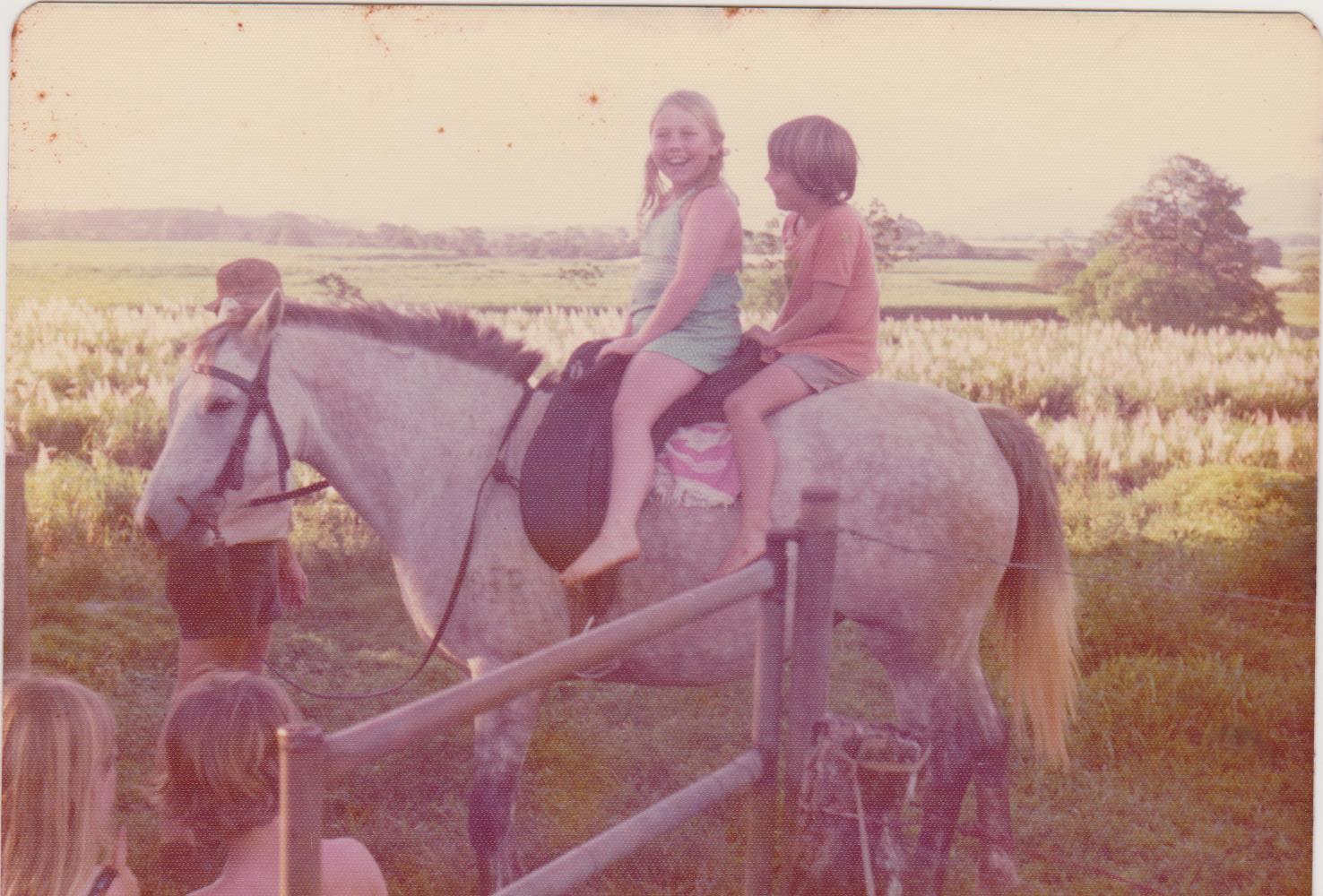
Me and my brother Matty riding a horse 1975

In Thrill Seekers I used three, first person voices. Brian, the eldest brother tasked with protecting his brother and mother after the death of his father; Douggie, the younger brother who develops schizophrenia and Beck, a girl in the neighbourhood entangled in the mess the boys make. The use of first person brings the reader as close as possible to the reader. First person, present tense is the most immediate and intimate of voices. I chose Brian to be the protagonist and to begin and end the story because he had most at stake. He was the one given the ‘quest’ of protecting the family so his struggle to do so shapes the narrative. Douggie’s voice gives the perspective of the son who has lost his battle with grief and his mind in the process. Beck provides a feminine view of the events and the boys themselves.
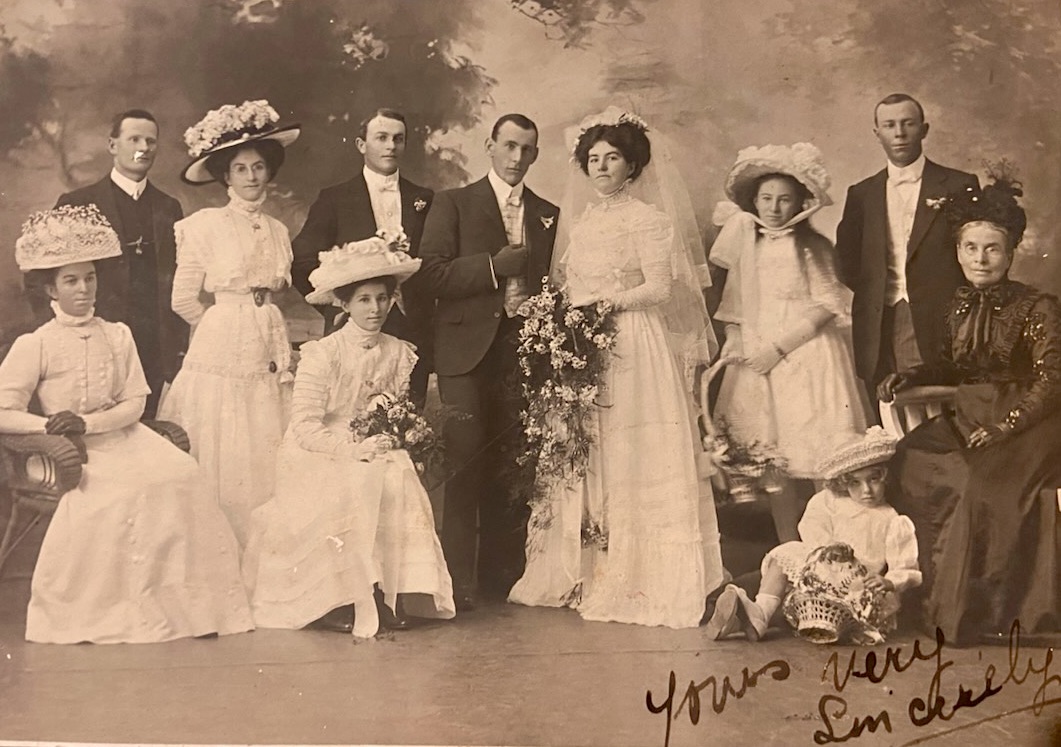
My nana's sisters are the flower girls here, their mother seated on the far left

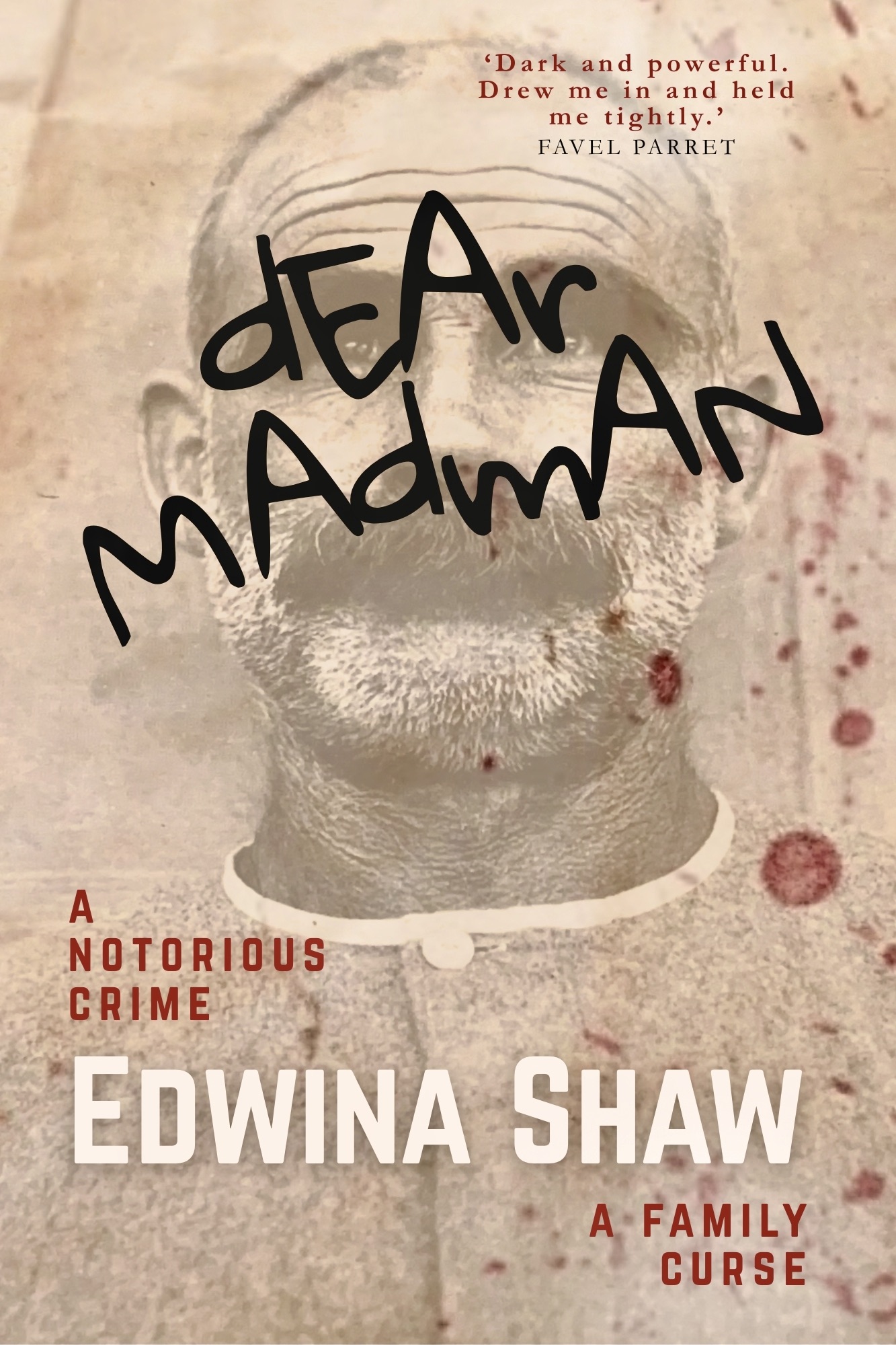
IDear Madman I again used three main strands. I like the balance three brings and often warn writers of the dangers of only using two focalisers. This results in a battle for supremacy, whereas three strands weave together easily, like a plait. The murderer Joe’s voice, came to me so strongly I had no choice but to take dictation of his flood of excuses, blame and hopelessness. His voice was so strong it was a fight to contain him and wrest back control of the book. I attempted to balance his first-person rant with a more subdued third person omniscient (this means going into multiple character’s viewpoints within the same section) strand of the family members, with each expressing the impact of this man’s presence and actions throughout. Still the book’s balance wasn’t there until I added the third strand, my own memoir voice, interpreting and reflecting on my research journey and the intergenerational effects of violent crime. 

HOW DO YOU CHOOSE YOUR POV CHARACTERS?
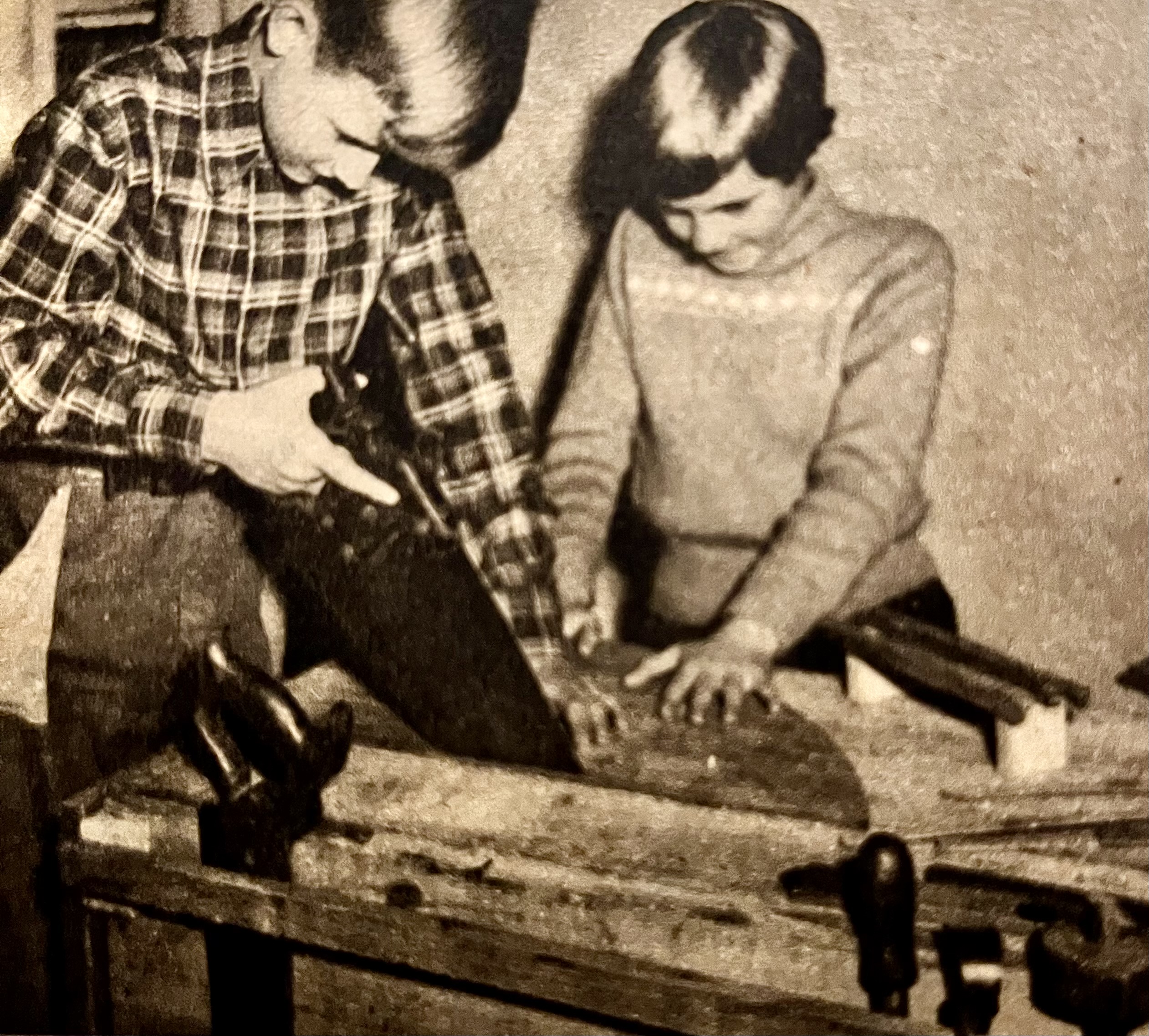
Who has the most to lose?
  1. Choose your protagonist – the character with a quest or question that must be answered. This character usually has the most to lose. Think about this throughout. What is at stake? What is the very worst that could happen to them? Make it worse.
  • Will you have an antagonist? Is there a human adversary to your main character? Getting inside their head will give an interesting depth and perspective. Why do these ‘bad’ guys do the bad things? What motivates them? (Every one of your characters has a goal, desires and dreams, even those without focaliser status)
  • Which other character’s perspective will bring the most nuance and insight to the story events? Find another character who loves, or hates, or is investigating one or both of the other focalisers. What will they bring to the story? 
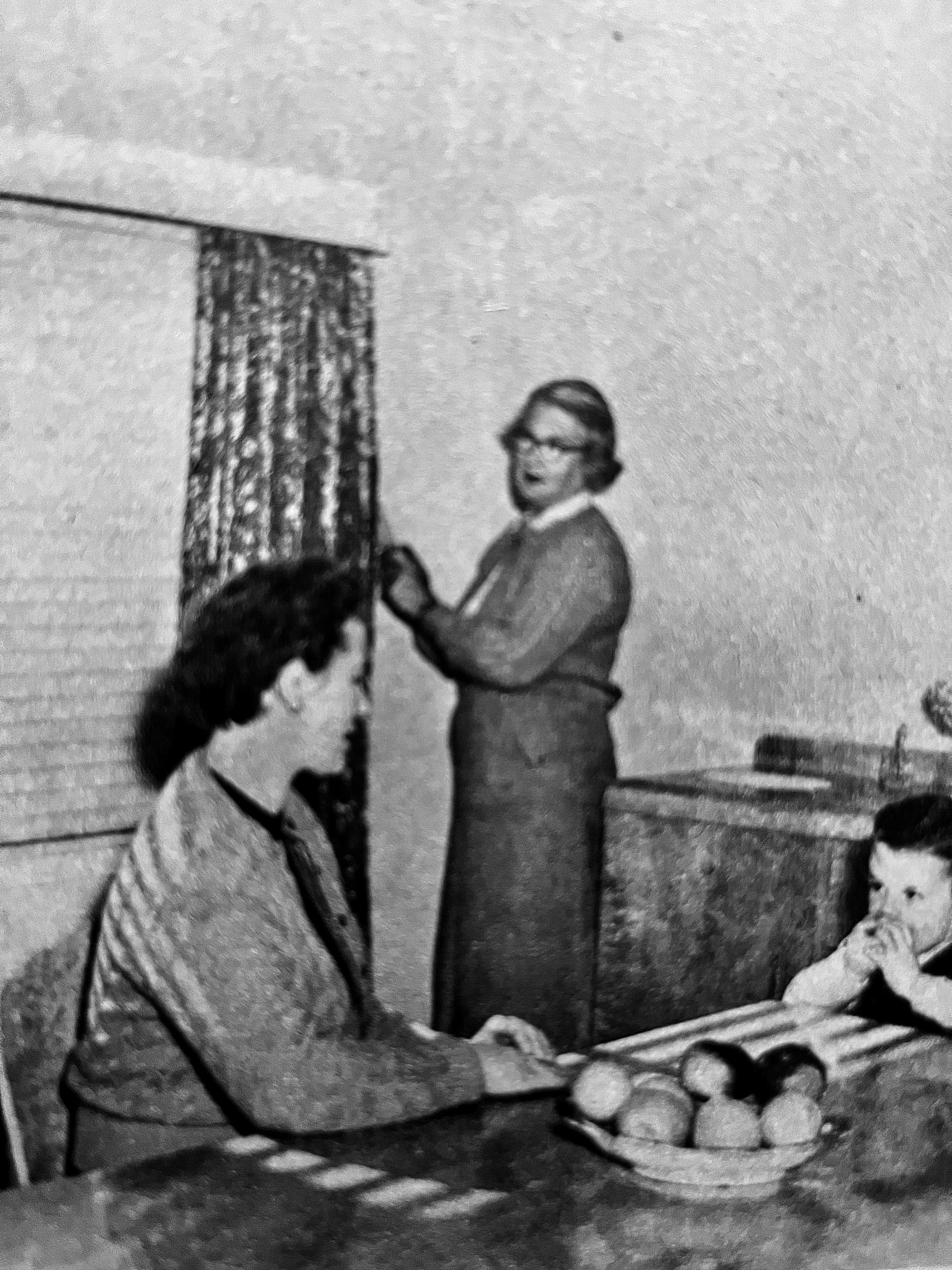
Mother, daughter, child? What part does each voice play?

HOW MANY VOICES?

From experience I’d recommend three to five focalisers. More than this can become confusing for the reader, unless expertly managed. Beware of the two hander and that battle for supremacy – finding that balance is very tricky.

Cave ceiling without illumination

DIFFERENTIATING THE VOICES

A lot of commercial fiction these days separates different viewpoint third person POV sections in their own chapters. For example a story of three sisters around the death of their mother, which is told in chapters that alternate between the three perspectives. Even though they were brought up in the same family, culture and environment, each of these voices needs to be immediately recognisable. Their way of speaking, thinking and being in the world must show through in their chapters from the first line of each of their sections. A heading with their name at the top of the page isn’t enough.

Get to know your characters through daydreaming about them, collaging their worlds, doing lots of backstory writing about them, getting into their heads. Try my “Getting into Character” exercise for a great way to access their psychology. Differentiate each one with idiosyncratic ways of speaking and behaving. One may bulldoze over everyone else’s attempts to speak. Another may end every sentence with a question mark or start each one with “sorry”. Another may remain mostly silently but have the greatest insight into the hearts of the others and herself.

A change of perspective can bring new light to a situation and illuminate it! Same cave ceiling, different perspective!

Using multiple viewpoint characters is also very useful in shaping a suspenseful plot. One of the best pieces of advice I’ve received in my 24 years plus of writing, is “Don’t take the reader where they want to go.” End a scene on a cliffhanger – never solve a situation within a scene – then take the reader to the next POV character and flesh out their scene leading to another cliffhanger, then switch to the next POV and then finally back to our first character, resolve that dilemma and move onto the choice or cliffhanger and so on. 

In traditional memoir you are confined to the first person past tense voice of “I”, though even then we have “previous you” and “wise you now”. But you can also do as Kris Olsson did in Boy Lost and I did in Dear Madman, recreate scenes and characters from the past to provide other strands and viewpoints.
I hope that has demystified using multiple points of view a little. Any questions just ask!

If you’d like to immerse yourself in your writing and learn more about the craft from me and the wonderful Kerstin Pilz in person, we still have a few rooms left for our September 19 – 24 Byron Bay Writing Retreat. Writers of all levels of experience and genders are welcome. If you have an ABN for your writing, all retreats are tax deductible! YES!

Workshops on retreat are lots of fun!

Bookings are now open for Blissful Bali 2027 and Italy 2027 too (one large single and one shared room – grab a writing friend for the holiday of a lifetime!).

In the meantime, write like the wind – wild and free and don’t let the bastards get you down!

Lots of love,

Edwina 🙂 xx

WHO IS TELLING THIS STORY? Managing Point of View

But whose dream is it?

So, who IS telling your story? Whether you’re writing memoir, fiction or screenplay, you need to make important decisions about which characters you’re going to give a voice.

WHO IS YOUR PROTAGONIST?

Who is the main character in your story? 

If you’re writing memoir, even though many writers try to avoid it, YOU are the main character.  

If you’re writing fiction you need to decide whose story is propelling the overarching narrative – that character’s goals and battles to achieve them is what drives the story forward. They are your protagonist.

If you have multiple protagonists, one character must have slightly more say than the others – this is the character who begins and ends the story. Other voices can be almost as strong but the protagonist has the final say. In my book Thrill Seekers I have three protagonists, Brian, his younger brother Douggie, and Beck, their friend. Because it is Brian’s goal – to protect his brother – that propels the entire narrative, he is the protagonist. He has the first chapter and the last.  So think carefully if you’re dealing with multiple character voices and decide which one is the main driving force.

If you’re not sure about who your main character is, ask yourself “WHO HAS THE MOST TO LOSE?”

HOW WILL YOU GIVE VOICE TO THESE CHARACTERS?

If you’re writing memoir, mostly you will need to write in first person, and learn to embrace sentences starting with “I” or learn to cleverly avoid doing so. However, you will also need to include a reflective voice that I like to call, “Wise you now”, between the scenes bringing to life the past, staring “previous you”. You could write the scenes from the past in past tense first person and the reflective sections in first person present tense, or past tense too, depending on how you feel about present tense.

Fiction can also be written in first person, past or present tense, but managing multiple voices like this can be tricky. Thrill Seekers is written this way, each character is in first person present tense. My Cambodian novel, Child of Fortune has two main characters – an Australian traveller and a Khmer survivor of the Pol Pot regime. Both of these women are written in first person, past tense. These days however, due to the Own Voice movement, I would recommend writing characters from other cultures only in third person. I also advise against having only two main characters given voice. This is difficult to manage and becomes a tennis match with one character often overpowering the other. To remedy this, add a third character voice to bring more balance, a plait rather than a ping pong match back and forth.

Most popular in modern fiction is writing in closed third person, past tense. This is the simplest way to manage multiple protagonists. In closed third person, you write using he, she or they in separate chapters that alternate. This method allows for multiple viewpoints and clashing perspectives that has lots of scope for adding interest to your story. However, with closed third person, as with first person, you are confined to what that character has seen and heard and cannot stray outside this perspective.

My latest story, “Shadowman” (Dear Madman in a different incarnation) a literary true crime memoir/novel hybrid, is told in three alternating sections in three different perspectives. The first section is the first-person voice of “the writer”, the second voice is the Shadowman – also in first person. The third section is told in omniscient third person, with the voices of multiple characters, members of the Williams family. Omniscient voice is the “God” voice, enabling the writer to move between character’s points of view within chapters, though I keep them in separate scenes. Modern audiences find this voice confusing, and I must say I found it difficult to manage as well, though I got there in the end.

You can choose to write a character in second person too – the “you” voice – but eventually it becomes synonymous with first person, so is best left to short stories or short sections within your longer piece. It can be used effectively in memoir to give another’s perspective, eg You didn’t say anything. You walked away.

MANAGING POINT OF VIEW

Now you have chosen your POV characters and the voices you will use and how you will animate them, you need to establish the structure and the voices you want within the first section of your book. If you have three POV characters, and you want these voices to interweave (not have separate sections of the whole book – eg Part 1 – Anne, Part 2 – Bob, Part 3 – Grace) you need to set this up right from the start.

For example, Shadowman starts with a chapter from the writer, which establishers her as the main protagonist. The second strand belongs to the Shadowman, and the third strand is the omniscient voices of the family. All three voices have a chapter within the first 10 pages. This lets the reader know what’s going on, who is telling the story, and the pattern to expect right from the start.

AVOID INTRODUCING NEW POV CHARACTERS AFTER THE FIRST ACT

All rules are made to be broken and you can find many examples of characters joining the fray in the second act, or even third, but it is best to avoid doing this. Set up your POV characters in those first 10 pages and then stick with these characters all the way to the end – well one or two may get knocked off!

Avoid introducing new POV characters after act one, this only confuses readers. If you want to bring in a twist that introduces this new POV character, then at least foreshadow this possibility in the first act. Give us a hint that this may happen, mention their name, make them a part of the story in some way, even if they aren’t yet in the action.

Point of view is important to establish early, so the reader knows which characters they are following. Introduce important characters first up so we know whose side we’re on. Keep the number of characters manageable or add a glossary. But who wants to be checking a glossary all the time – except maybe Tolkien fans!

And if you’re writing short stories keep the number of characters low. The lower the wordcount, the lower the character count.

Introduce all characters and the way you will be telling their side of the story early. If you’re a new writer, stick to one voice, at least to start with. If you want to include other voices, closed third person in alternating chapters is easiest to manage, but all this needs to be set up right from the start. Build trust with your reader by showing them your plan and sticking with that plan. 

No randoms! No slipping between points of view without intention. Flag all changes in point of view so we know they’re intentional. 

Image by Jana Shannon.

Managing POV can be tricky, so think about it before you rush in, and have a rough plan about how you think it will work. It can be lots of fun writing in a few different voices, but make sure they are balanced, that they are each different and that your one main character has first say and the final word.

Hope that’s useful! GOOD LUCK!

Let me know how you go managing POV.

Lots of love

Edwina xx